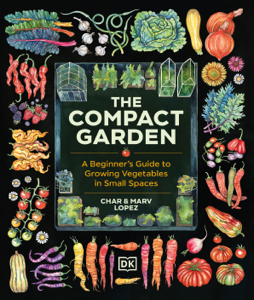
The Compact GardenMarv Lopez & Char Lopez
- Genre: Gardening
- Publish Date: April 14, 2026
- Publisher: DK
- Apple Books | $1.99Amazon Kindle


The top 50 best selling gardening books at the Apple Books. Chart of the most popular gardening iBooks is updated daily.
Chart of the top gardening ebook best sellers was last updated:
1
The Compact GardenMarv Lopez & Char Lopez
You don’t need a lot of land to create a beautiful, bountiful garden. Char and Marv of Planted in the Garden are urban gardeners from Toronto who fell in love with growing food, not only for the fresh homegrown vegetables, but to show that small spaces can still produce big harvests. In their debut gardening book, you’ll find instructions for: Creating a small-space garden: Learn how to set up raised beds, containers, and vertical gardens to maximize growing space both indoors and outdoors. Growing beginner-friendly veggies: Discover which crops are easy to grow and low maintenance, including tomatoes, cucumbers, lettuces, beans, peas, and more. Planning out your growing year: Maximize your harvest by planting seeds at the optimal time for your garden’s climate zone. Harvesting organic produce at home: Manage pests and fertilize plants without the use of synthetic chemicals. Adding flowers and herbs to your garden: Decide which varieties to plant based on what will flourish in your space and attract pollinators for your vegetables. With step-by-step instructions, you will be able to plan, plant, and maintain an abundant garden that not only provides you with fresh, healthy produce, but also adds beauty to your outdoor space, no matter how big or how small. Happy gardening!
2

The Science of GardeningDr. Stuart Farrimond

The only book to explain the science behind gardening practice in a simple and visually accessible way Exploding myths and providing authoritative take-home advice, this book provides a shortcut to decades of gardening experience by explaining the science behind how a garden grows. Why does my cherry tree blossom but never fruit? What's the most effective slug deterrent? Could I breed my own unique variety of flower? Do plants communicate? Does it really matter how I prune? Why is my compost heap so slimy? The world of gardening can be a mystifying place, with so many instructions to follow and often little explanation as to why. Dr. Stuart Farromond casts his scientific eye over a typical year in the garden to answer all the horticultural questions you've ever wanted the answer to. From hands-on, practical advice, to an exploration of the mental health benefits of gardening, while also covering topics such as the positive impact gardening can have on the earth during a time of climate crisis in between, Science of Gardening debunks myths and reveals the latest science only taught at horticultural college. As a passionate newcomer to gardening, daunted by the mountain of often conflicting advice in gardening manuals, Dr. Stu has set about testing the scientific basis of so much conventional wisdom and practice so you too can garden like a pro.
3

Ficus Bonsai GuideBonsai Empire

Learn how to maintain your Ficus Bonsai tree with the "Ficus Bonsai Guide". Ficus plants are incredibly popular Bonsai trees, sold at many stores and online shops. They are strong trees, do well indoors, and are very suitable for beginners at the art of Bonsai. But how do you keep your tree alive? And how can you maintain its shape? The "Ficus Bonsai Guide" explains the care guidelines, cultivation and design principles for the Ficus. It includes over a hundred photos and explains techniques including watering, fertilizing, repotting, pruning and wiring in easy to use step-by-step guides. - over 100 stunning images - explains Ficus care, styling and propagation - with step-by-step explanations - all techniques explained specifically for the Ficus Bonsai Empire is the world's most visited Bonsai website and has provided beginners with quality information for over a decade. We have developed this Ficus guide to help you get a taste of this fascinating and living art, and make sure you know how to care for your Ficus Bonsai!
4

All New! Square Foot Gardening, 4th EditionSquare Foot Gardening Foundation

Over 3 million copies sold! This revolutionary gardening book gets a revolutionary update for its 4th edition—new plans, options, and advice herald a modern approach to this tried-and-true method. No digging, no tilling, no fertilizing, no machinery or heavy tools—less watering, waste, and weeding! In All New! Square Foot Gardening, 4th Edition , discover the foolproof gardening method that has helped generations of gardeners around the world raise their own organic vegetables in less space, with less effort, and for less money than traditional row gardens. The Square Foot Gardening (SFG) technique takes the guesswork out of every step , even if you are completely new to gardening. The process is simple: set up your garden box, fill it with a growing blend known as Mel’s Mix™, and add a square-foot grid on top to guarantee proper plant spacing and maximum yields. With this easy and flexible system, you’ll reap the rewards of baskets of homegrown produce to enjoy with friends and family. In the 4th edition, enjoy: Updated and beautifully illustrated garden plans to help you lay out your plantings and grow what your family eats mostExtensive new charts with crop-by-crop information on how and when to plant and harvest each vegetableFlexible, step-by-step building plans for garden boxes you can build, fill, and plant in a single afternoonInsight on where to place your garden, how to plan your squares, and how to care for your plants organicallyInstructions for DIYing trellises, hoop tunnels, archways, and other accessories for your SFGMore practical solutions to today’s biggest gardening challenges, including deer, extreme weather, and insect pestsNEW – Information on building and using “top hats” to grow healthy root crops in a standard SFG bedNEW – Alternative options if the standard Mel’s Mix ingredients aren’t available to you or you’re looking for alternatives to peat moss 200 NEW PHOTOS, 30 NEW ILLUSTRATIONS – Redesigned pages with all-new illustrations for fun, easy planning, and new photographs to reflect more diverse growing locationsPlus, a Quick Start Guide to get you growing today It is a mission of the SFG Foundation to empower gardeners with the skills to create their own sustainable, sufficient, and reliable food source. They strive to reduce world hunger by teaching people in underserved countries how to grow their own fresh produce to eat and sell. If you’re looking for a low-maintenance, lower-cost way to grow food for yourself and your family, you will find success with this invaluable reference. If you’re already a dedicated Square Foot Gardener with a tattered copy of a previous edition, you will expand on your success with the updated and enhanced guidance. With All New Square Foot Gardening, 4th Edition , you’ll discover everything you need to know about the world’s most popular growing technique to harvest MORE food from less space. Now you can garden anywhere!
5

Home HydroponicsTyler Baras

Turn a coffee table, kitchen cupboard, bathroom wall, bedside table, or windowsill into a wonder of hydroponic production with project plans and DIY tutelage from hydroponic-growing pro Tyler Baras. Yes, you can grow your own delicious food literally anywhere . In Home Hydroponics , “Farmer Tyler” shows you how easy it is to build your own soilless growing systems to cultivate greens, veggies, herbs, and more. And, to sweeten the deal even further, Tyler’s designs are not just functional, they’re also attractive. In fact, unlike the typical industrial designs of most DIY hydroponic systems, these projects fit beautifully into your living space , no matter its size or style. The small-space hydroponics projects found here come with easy-to-follow, step-by-step plans for making growing systems that fit right into your home. No need to have a separate grow room or to tuck your plants into a corner of the basement. Transform a living room armoire into a food-growing machine Build a hydroponic wall garden for the dining room Convert a bar cart into a mobile hydroponics system Grow scented herbs in a unique hanging unit Fill a kitchen window with hydroponic suction cup planters Cultivate your own food on a compact corner shelf in your bedroom With hydroponics, you can grow productive plants anywhere , even in the total absence of natural sunlight. Home Hydroponics covers everything from crop selection and lighting to nutrient management and site selection . Convert almost any room in your home into a mini food farm with the resources and projects found here.
6

Ficus Tree and Ficus Bonsai Tree. The Complete Guide to Growing, Pruning and Caring for FicusBernard Brook

This book contains everything you need to know about growing, pruning and caring for ficus trees and ficus bonsai trees, also known as fig trees. The most popular varieties are covered including benjamina, ginseng, retusa, microcarpa and religiosa. This book is perfect for the beginner and is written in easy to understand English which makes it both enjoyable and easy to follow. Full of good basic advice on how to grow ficus trees and ficus bonsai trees successfully, this really is the must have guide to ficus.
7

Bonsai brings serenity to the home with beautiful miniature trees in idyllic container landscapes. Now DK brings this ancient practice into the 21st century, explaining how to grow and care for bonsai trees with a clear step-by-step approach. Offering easy-to-follow advice and simple photography, Bonsai demystifies the art of bonsai with sequences covering the traditional styles of Chokkan, Moyogi, Shakan, and Kengai, as well as deadwood bonsai styles such as Ishizuki, Yose Uye, and Sharimiki. For bonsai enthusiasts in search of fresh ideas, innovative techniques, and new ways to display their living art, Bonsai is the must-have ebook of the season.
8

The Complete Guide to Building Backyard Ponds, Fountains, and Waterfalls for HomeownersMelissa Samaroo

According to HGTV, the popular home and garden cable television station, water features are currently among the hottest landscaping trends in the United States, offering a way to increase a home’s resell value and providing a creative outlet for homeowners. Whether you are looking to create a lush outdoor paradise, complete with waterfalls and fish-filled ponds, or you simply want a conservative balcony fountain, this book can show you how to build your own backyard escape no matter your budget. The Complete Guide to Building Backyard Ponds, Fountains, and Waterfalls for Homeowners provides step-by-step instructions and design plans for building a variety of water features. The book will show you how to appraise the size, shape, and topography of your yard to decide which features will work best in your space. Once you have assessed your style and space, you will be given a variety of design plans for various basic and complex water features, complete with step-by-step instructions, dimensions, and supply lists. You will learn which tasks you are capable of completing yourself and when you should call a licensed professional. Once you have installed your water feature, you will be given advice on adding those special touches to your landscaping project. We have spent hundreds of hours interviewing landscaping artists and homeowners just like you who can offer tips and tricks for completing your backyard makeover. This book can help you build a backyard oasis that you can enjoy for many years to come.
9

Bonsai Master ClassKunio Kobayashi

Take a master class by one of the world's greatest living bonsai masters! Kunio Kobayashi is one the world's most recognized bonsai artists. In this comprehensive book, he presents all the essential techniques needed to plant and maintain the most popular types of bonsai—from pines, cypress and cedar to flowering trees and other beloved varieties, including grasses. Bonsai Master Class is a book for new fans and longtime aficionados alike, showing you how, with the help of human hands, a bonsai tree can evolve and thrive over centuries. This book provides you with all the vital information you need, including: A thorough explanation of the basic bonsai types and styles, and their characteristicsGuidance in the art of selecting the right plants, pots and spaces to display your bonsaiTips on getting started including purchasing the plants, assembling the necessary tools and choosing the soilsAdvice and techniques for planting, repotting, watering, pruning, shaping, wiring and protecting your plants, including a seasonal schedule of tasks for each type of bonsaiDetailed lessons for specific bonsai varieties like Japanese cypress, red pine, maple, zelkova, sakura and more! You'll be inspired by Kobayashi's award-winning bonsai ranging from classic types to out-of-the-box originals, showing how this art form is as individual as it is traditional. His book will become your bible as you nurture and cultivate your skills and knowledge of these venerable plants.
10

Homesteading for HealthRobert W. Malone & Jill Glasspool Malone

A compelling blend of memoir, practical wisdom, and eye-opening food science. This is the homesteading book that tells you not just how to build a self-sufficient life, but why it matters more today than ever. Written by Drs. Robert and Jill Malone, Homesteading for Health is rooted in four decades of lived experience across six working farms in Maryland, Georgia, and Virginia. From hauling water in buckets on a derelict property with no heat or plumbing to breeding Percheron draft horses, rebuilding depleted soil from red clay, and raising their family on food they grew themselves, the Malones have done the hard work, and they share it all with honesty, humor, and hard-won authority. Inside, you’ll find practical, experience-tested guidance on: • Finding and financing a homestead without taking on crushing debt • Raising chickens, goats, sheep, cattle, pigs, turkeys, and exotic poultry, including breed-specific advice and frank warnings about what goes wrong • Rebuilding living soil through composting, cover crops, and rotational grazing • Preserving food and organizing a household that actually functions • Gardening for nutrient density using raised beds, heirloom varieties, and organic methods But Homesteading for Health goes further than any typical how-to guide. In a frank, well-sourced investigation of modern food and agriculture, the Malones trace how industrial policy, corporate influence, and flawed nutritional science reshaped the American diet, and what families can do to take back control. From the hidden history of breakfast cereal and seed oils to the real evidence on raw milk, eggs, and regenerative farming, this book challenges what you think you know about what’s on your plate. Whether you have forty acres or a suburban backyard, this book will show you how small, deliberate steps (a garden bed, a few laying hens, a loaf of bread baked from freshly milled grain) can transform your health, your household, and your sense of purpose.
11

A Way to GardenMargaret Roach

“ A Way to Garden prods us toward that ineffable place where we feel we belong; it’s a guide to living both in and out of the garden.” —The New York Times Book Review For Margaret Roach, gardening is more than a hobby, it’s a calling. Her unique approach, which she calls “horticultural how-to and woo-woo,” is a blend of vital information you need to memorize and intuitive steps you must simply feel and surrender to. In A Way to Garden , Roach imparts decades of garden wisdom on seasonal gardening, ornamental plants, vegetable gardening, design, gardening for wildlife, organic practices, and much more. She also challenges gardeners to think beyond their garden borders and to consider the ways gardening can enrich the world. Brimming with beautiful photographs of Roach’s own garden, A Way to Garden is practical, inspiring, and a must-have for every passionate gardener.
12

England's Magnificent GardensRoderick Floud

An altogether different kind of book on English gardens—the first of its kind—a look at the history of England’s magnificent gardens as a history of Britain itself, from the seventeenth-century gardens of Charles II to those of Prince Charles today. In this rich, revelatory history, Sir Roderick Floud, one of Britain’s preeminent economic historians, writes that gardens have been created in Britain since Roman times but that their true growth began in the seventeenth century; by the eighteenth century, nurseries in London took up 100 acres, with ten million plants (!) that were worth more than all of the nurseries in France combined. Floud’s book takes us through more than three centuries of English history as he writes of the kings, queens, and princes whose garden obsessions changed the landscape of England itself, from Stuart, Georgian, and Victorian England to today’s Windsors. Here are William and Mary, who brought Dutch gardens and bulbs to Britain; William, who twice had his entire garden lowered in order to see the river from his apartments; and his successor, Queen Anne, who, like many others since, vowed to spend little on her gardens and instead spent millions. Floud also writes of Frederick, Prince of Wales, the founder of Kew Gardens, who spent more than $40,000 on a single twenty-five-foot tulip tree for Carlton House; Queen Victoria, who built the largest, most advanced and most efficient kitchen garden in Britain; and Prince Charles, who created and designed the gardens of Highgrove, inspired by his boyhood memories of his grandmother’s gardens. We see Sarah, Duchess of Marlborough, who created a magnificent garden at Blenheim Palace, only to tear it apart and build a greater one; Deborah, Duchess of Devonshire, the savior of Chatsworth’s 100-acre garden in the midst of its 35,000 acres; and the gardens of lesser mortals, among them Gertrude Jekyll and Vita Sackville-West, both notable garden designers and writers. We see the designers of royal estates—among them, Henry Wise, William Kent, Humphrey Repton, and the greatest of all English gardeners, “Capability” Brown, who created the 150-acre lake of Blenheim Palace, earned millions annually, and designed more than 170 parks, many still in existence today. We learn how gardening became a major catalyst for innovation (central heating came from experiments to heat greenhouses with hot-water pipes); how the new iron industry of industrializing Britain supplied a myriad of tools (mowers, pumps, and the boilers that heated the greenhouses); and, finally, Floud explores how gardening became an enormous industry as well as an art form in Britain, and by the nineteenth century was unrivaled anywhere in the world.
13

How to Grow FoodHuw Richards & Sam Cooper

Gardener Huw Richards and chef Sam Cooper bridge the gap between the garden and kitchen, profiling the growing and cooking of 70 crops. In this super-practical companion for all kitchen gardeners, each crop has no-nonsense growing information on spacing, sowing, and harvesting, accompanied by delicious and simple recipes for food made well. Whether you have containers on a balcony or acres of land, easy guides show the number of plants you can grow per square meter and the approximate harvest per plant so you can easily work out how many plants to grow and expected yield. There are also suggestions for the best varieties to grow for resilience and flavor. Recipes are easily adapted depending on how much you harvest and range from dishes to eat right away, such as a root vegetable tartiflette, and preserves to enjoy later, like a tomato sauce to add to pastas and stews. So if you’re motivated by food and flavor, The Homegrower’s Companion has everything you need to grow, harvest, store, and cook the tastiest fresh produce.
14

Back to BasicsAbigail Gehring

Over 1,500,000 copies sold—an international bestseller! NATIONAL BESTSELLER! #4 BALTIMORE SUN BESTSELLER #7 AMAZON WEEKLY BESTSELLER Fully updated—Dye your own wool, raise chickens, make your own cheddar cheese, build a log cabin, and much much more. Anyone who wants to learn basic living skills—the kind employed by our forefathers—and adapt them for a better life in the twenty-first century need look no further than this eminently useful, full-color guide. Countless readers have turned to Back to Basics for inspiration and instruction, escaping to an era before power saws and fast-food restaurants and rediscovering the pleasures and challenges of a healthier, greener, and more self-sufficient lifestyle. Now newly updated, the hundreds of projects, step-by-step sequences, photographs, charts, and illustrations in Back to Basics will help you dye your own wool with plant pigments, graft trees, raise chickens, craft a hutch table with hand tools, and make treats such as blueberry peach jam and cheddar cheese. The truly ambitious will find instructions on how to build a log cabin or an adobe brick homestead. More than just practical advice, this is also a book for dreamers—even if you live in a city apartment, you will find your imagination sparked, and there’s no reason why you can’t, for example, make a loom and weave a rag rug. Complete with tips for old-fashioned fun (square dancing calls, homemade toys, and kayaking tips), this may be the most thorough book on voluntary simplicity available.
15

Teaming with MicrobesJeff Lowenfels & Wayne Lewis

" A breakthrough book. No comprehensive horticultural library should be without it." — American Gardener When we use chemical fertilizers, we injure the microbial life that sustains plants, and then become increasingly dependent on an arsenal of toxic substances. Teaming with Microbes offers an alternative to this vicious circle, and details how to garden in a way that strengthens, rather than destroys, the soil food web. You'll discover that healthy soil is teeming with life—not just earthworms and insects, but a staggering multitude of bacteria, fungi, and other microorganisms. This must-have guide is for everyone, from those devoted to organic gardening techniques to weekend gardeners who simply want to grow healthy plants without resorting to chemicals. "Digs into soil in a most enlightening and entertaining way." — Dallas Morning News "Required reading for all serious gardeners." — Miami Herald "The authors have given gardeners an inside scoop on the scientific research supporting organic gardening." — Pacific Horticulture "This intense little book may well change the way you garden." — St. Louis Post-Dispatch "Exceptional. . . . A brief, clear overview of scientific information with which every gardener should be familiar." — Monterey Herald
16

Gardening 101Borden Shattuck

Are you a nature lover? Do you enjoy outdoors? Maybe, you have an out-of-door little paradise in your yard? Do you like gardens and gardening? If you belong to any of these groups of people, then you are a gardener type. This type of people, enjoy spending their time out of their home, imprisoned between four walls, and adore the fresh air and the smell of the grass, the flowers, the sun rays and the birds. You probably are interested in gardening, as it allows you to make our own decisions on how to design your garden. But, you cannot become a gardener overnight, since none of us is born with the knowledge needed for gardening. If you want to become a gardener without spending too much time on learning a lot of unneeded information, this is the right book for you. In it, you will find information about soil, situation, laying out gardens, making and managing of hot-beds and green houses. You will also read about cultivation and propagation of several sorts of fruits, herbs, vegetables and flowers. In simple words, this book contains all the things you should know in order to become gardener.
17

Self-Sufficiency for the 21st CenturyDick Strawbridge

Find your route to a more sustainable lifestyle with Dick Strawbridge and his son, James. We can all take steps to reduce our carbon footprint and be more self-sufficient. For some, that might mean heading to the countryside to live off the land. For the rest of us, the reality might involve smaller, but no less important, lifestyle changes: cutting back on plastic or food waste, growing vegetables, preserving meat and fish, preparing jams and chutneys, baking sourdough bread, making your own plant-based milk, or keeping a chicken or two. Dick and James Strawbridge know what it's like to make these changes. Between them, they've lived on a smallholding, in a terraced house, and even a chateau. In this updated edition of Self-Sufficiency for the 21st Century , they share everything they've learned and give you the tools you need for a more rewarding and environmentally conscious life.
18

Sustainable Market FarmingPam Dawling

Growing for 100 - the complete year-round guide for the small-scale market grower. Across North America, an agricultural renaissance is unfolding. A growing number of market gardeners are emerging to feed our appetite for organic, regional produce. But most of the available resources on food production are aimed at the backyard or hobby gardener who wants to supplement their family's diet with a few homegrown fruits and vegetables. Targeted at serious growers in every climate zone, Sustainable Market Farming is a comprehensive manual for small-scale farmers raising organic crops sustainably on a few acres. Informed by the author's extensive experience growing a wide variety of fresh, organic vegetables and fruit to feed the approximately one hundred members of Twin Oaks Community in central Virginia, this practical guide provides: Detailed profiles of a full range of crops, addressing sowing, cultivation, rotation, succession, common pests and diseases, and harvest and storageInformation about new, efficient techniques, season extension, and disease resistant varietiesFarm-specific business skills to help ensure a successful, profitable enterprise Whether you are a beginning market grower or an established enterprise seeking to improve your skills, Sustainable Market Farming is an invaluable resource and a timely book for the maturing local agriculture movement.
19

The Green Witch’s Herbal CompendiumAnnabel Margaret

This detailed guide to herbs and all of their properties from magical to medicinal will be an essential guide for anyone looking to bring them into their daily practice. Each herb will get their own profile where Annabel dives into the magickal properties, planet, element, and suggested use of each one. Who knew that mint can be used in money spells just as well as it can be used to ease an aching head or nauseous stomach? Readers will find endless ways to use herbs not only medicinally, but also magically. Annabel explains how different herbs can benefit your altar, along with what kinds of spells they can be used in. From money spells to protection and purification, she describes in detail how each one can be a tool that’s part of a greater purpose. Besides their magical properties, many of these herbs can be used for their medicinal properties like aiding in nausea, fighting inflammation, and treating things like IBS and anxiety. This comprehensive guide to all things herbs is sure to have readers looking at their local produce section with a whole new perspective.
20

Lush Lawns: MidwestEvan Maxon

Lush Lawns: Midwest - A Comprehensive Guide to Mastering Lawn Care in the Midwest" is the ultimate resource for both novice and experienced gardeners looking to cultivate and maintain vibrant, healthy lawns in the heart of America. This expertly crafted guide offers a deep dive into the specific challenges and rewards of Midwest lawn care, combining scientific research with practical, hands-on advice. Spanning every aspect of lawn maintenance, "Lush Lawns" covers essential topics such as soil analysis, proper watering techniques, fertilizer use, pest and weed control, and seasonal adjustments necessary to thrive in the Midwest's unique climate. The book is meticulously organized into detailed chapters that address: Fundamentals of Lawn Care - Laying the groundwork with an introduction to the basic principles of lawn health, including soil types, grass varieties, and the tools every gardener needs. Seasonal Care - Detailed, month-by-month guides tailored to the Midwestern seasons, ensuring your lawn receives exactly what it needs to look its best all year round. Troubleshooting Common Issues - Practical solutions for dealing with common problems such as invasive weeds, lawn diseases, and environmental stresses like drought and frost. Advanced Techniques and Technologies - Introducing the latest innovations in lawn care, including smart irrigation systems and eco-friendly practices that conserve water and reduce chemical use. Regional Resources - A comprehensive list of local extension services, expert consultants, and additional tools that support the specific needs of Midwestern gardeners. Each chapter is designed to not only provide essential information but also to empower homeowners to apply these practices to achieve the lush, green lawn of their dreams. The book also includes vivid illustrations, step-by-step instructions, and easy-to-understand diagrams that make the technical aspects of lawn care accessible to all readers. With its practical advice and in-depth coverage, "Lush Lawns" is more than just a lawn care manual—it's a tool for transforming your outdoor space into a beautiful, sustainable environment that enhances your home and lifestyle. Whether you're battling stubborn turf issues or just striving for the perfect green expanse, this book will be your go-to guide for lawn care in the Midwest. Join countless others who have turned their ordinary yards into extraordinary landscapes with the help of "Lush Lawns: A Comprehensive Guide to Mastering Lawn Care in the Midwest."
21

Home Vegetable GardeningF. F. Rockwell

For those who understand the significance of home-grown foods to surviving and thriving in difficult times, F. F. Rockwell's no-nonsense Home Vegetable Gardening: A Complete And Practical Guide To The Planting And Care Of All Vegetables, Fruits And Berries Worth Growing For Home Use, may be the best single volume, practical manual of family-feeding, high-yield home gardening ever compiled. With some, the home vegetable garden is a hobby; with others, especially in these days of high prices, a great help. There are many in both classes whose experience in gardening has been restricted within very narrow bounds, and whose present spare time for gardening is limited. It is as "first aid" to such persons, who want to do practical, efficient gardening, and do it with the least possible fuss and loss of time, that this book is written. "Home Vegetable Gardening" can be very useful for the small space gardener as it discusses at length, basics of gardening. Anywhere the book describes use of horses, logic would indicate that a tiller of varying sizes could be substituted. Crop rotation is also discussed, and multiple acres are not needed for this. Instructions on constructing a manure-driven hotbed (the way things were done before electric seedling heat mats were around) are also included. Another section of "Home Gardening" discusses prepping sods for seed starting, the way things were done years before pellet pots, plastic seed flats and cell packs were common. "Home Gardening" is old enough to resurrect much of the forgotten techniques used by our grandparents and great-grandparents, when they had to garden more naturally and self-sufficiently rather than buying everything from the garden store. It might also be helpful for the budding survivalist who no longer wants to rely on manufactured products. The list of seed varieties is fascinating. When it comes to gardening basics, the publishing date of this book matters very little: many things haven't changed at all. In fact, this book might be better for beginners since it is a book that encourages a do-it-yourself and a 'from the ground up' tone. It is almost void of any pre-made devices and there are no gimmicky products being hocked. In "Home Gardening," the old standby tools are recommended, time tested and readily available.
22

Darkness in BloomChloe Hurst

High priestess of The Goth Garden, Chloe Hurst summons spirits, death, Victorians, velvet, vampires, and all things witchy and dark to bring you this beautiful, inspiring, and spooky guide to gardening on dark mode. Get inspired to create a garden filled with moody, eerie undertones and the occasional deadly poison, add otherworldly companions to your houseplant jungle, and cultivate a home filled with macabre mystery. Darkness in Bloom shares plant profiles, design tips, and inspiration. You’ll learn the lore of gothic culture and how to integrate undying dark plants (perennials), dark specimen repurchases (annuals), indoor companions (houseplants), and haunting decorations.
23

Root, Nurture, GrowCaro Langton, Rose Ray & Ro Ro Co

Life with a potted plant is undeniably better. And better yet is the ability to grow and replicate new, healthy houseplants without ever having to visit a garden centre again. Learn to share, swap and celebrate the miraculous methods of multiplying all of your favourites at almost no cost at all. And here’s the secret: it’s really, really easy. Plants are designed to multiply. They spread their roots, send off inquisitive shoots, and regenerate themselves in all sorts of exciting and unexpected ways without any help. Even for the beginner indoor gardener, a single leaf can hold enough life to be successfully grown into a brand new plant. With Root, Nurture, Grow , you’ll quickly discover how to propagate any houseplant, take cuttings, cultivate runners and offsets, divide plants at the roots and even grow brand new root systems in the air. You’ll learn pruning methods that produce no waste, organic rooting medium recipes, and eventually enjoy gifting and swapping newly grown greenery with friends, family and other houseplant hoarders you’ll meet along the way. As well as myriad propagation methods, the book includes practical DIY projects to better nurture and display your plant family, including a homemade propagation chamber and simple self-watering planters.
24

Ground RulesKate Frey

"This luscious, photo-filled guide will inspire you with one hundred easy-to-implement tips." — Garden & Gun Gardening doesn't have to be difficult, and expert gardener Kate Frey makes it easier than ever. Ground Rules distills the vital lessons of gardening into 100 simple rules that will yield a gorgeous, healthy, and thriving home garden. In the photo-rich pages you'll discover tips on garden design, care and maintenance, healthy soil, and the best ways to water. You'll also learn how to create a garden that encourages birds and butterflies, how to choose healthy plants at the garden center, how and when to re-pot a container, and much more. With bite-size chunks of expert information and inspiring ideas, Ground Rules is your new go-to resource.
25

Back to BasicsAbigail Gehring

Over 1,500,000 copies sold—an international bestseller! NATIONAL BESTSELLER! #4 BALTIMORE SUN BESTSELLER #7 AMAZON WEEKLY BESTSELLER Anyone who wants to learn basic living skills—the kind employed by our forefathers—and adapt them for a better life in the twenty-first century need look no further than this eminently useful, full-color guide. Countless readers have turned to Back to Basics for inspiration and instruction, escaping to an era before power saws and fast-food restaurants and rediscovering the pleasures and challenges of a healthier, greener, and more self-sufficient lifestyle. Now newly updated, the hundreds of projects, step-by-step sequences, photographs, charts, and illustrations in Back to Basics will help you dye your own wool with plant pigments, graft trees, raise chickens, craft a hutch table with hand tools, and make treats such as blueberry peach jam and cheddar cheese. The truly ambitious will find instructions on how to build a log cabin or an adobe brick homestead. More than just practical advice, this is also a book for dreamers—even if you live in a city apartment, you will find your imagination sparked, and there’s no reason why you can’t, for example, make a loom and weave a rag rug. Complete with tips for old-fashioned fun (square dancing calls, homemade toys, and kayaking tips), this may be the most thorough book on voluntary simplicity available.
26

The New Gardener's HandbookDaryl Beyers

“Gardeners just starting out will earn a sense of accomplishment and a good dose of knowledge.” — Booklist Every new gardener has to start somewhere—and the process can be intimidating. Knowing when and what to plant, how to care for the plants once they’re in the ground, and how to keep pests and diseases away is a lot to take on. Luckily, Daryl Beyers—an expert from the New York Botanical Garden—has written what will be a go-to resource for decades to come. The New Gardener’s Handbook is a comprehensive overview of the fundamentals of gardening, based on the introductory gardening class that Beyers teaches at NYBG. Readers will learn about soil, plant selection, propagation, planting and mulching, watering and feeding, pruning, and weeds, pests, and diseases. The information applies to both ornamental and edible plants. Featuring inspiring photography and helpful illustrations, The New Gardener’s Handbook gives home gardeners a foundation upon which they can grow, and encourages them to apply the lessons they’ve learned in an intuitive, natural way.
27

The Self-Fed Farm and GardenEliot Coleman & Dan Barber

"Essential rules from a champion of organic growing."— New York Times “A radical yet timeless understanding of what organic farming is truly about. . . . Only Eliot could bring such clarity and wisdom to the conversation. . . . A must-read for anyone who believes that food can be a force for change. . . . A new classic for the ages.” —Jean-Martin Fortier, author of The Market Gardener ; founder, Market Gardener Institute In The Self-Fed Farm and Garden , renowned organic grower and best-selling author Eliot Coleman presents the organic method as the self-sustaining system it was meant to be, rooted in soil health care. With clarity and confidence born from years of experience, he shows readers how they can shift to a model that continually recharges the soil with organic matter, thus allowing the soil food web to provide all the nutrients that crops need for healthy growth and excellent yields. Filled with the same groundbreaking spirit of his now-classic The Winter Harvest Handbook —which introduced market gardeners to the simple, low-cost techniques by which they could harvest commercial vegetables all winter long—Coleman now shares his equally simple and dependable low-cost system for creating and maintaining guaranteed pure organic soil fertility that will carry your crop yields to perfection. The self-fed approach combines classic techniques practiced by the pioneers of organic farming, including: • Growing green manure crops year-round and shallowly tilling them into the soil • Growing leguminous plants to add nitrogen • Devising effective crop rotation systems for disease and weed control Implementing a self-fed system, Coleman explains, saves money and energy, avoids the hassles of acquiring outside organic matter (which can also introduce undesirable incidental pollutants into the soil), and covers everything that needs to be done to maintain soil fertility. Using classic techniques like green manures as a living soil improvement system ultimately allows you alone—not the farm and garden products industry—to be the master of your destiny. “This book steps back from the frantic energy of the marketplace to take a second look at what we mean when we say ‘organic,’ why we need it, and how to do it right.” —Dave Chapman, codirector, Real Organic Project
28

Vegetable Gardening For BeginnersMargaret Willow

Are you ready to grow your own delicious vegetables? This beginner's guide provides everything you need to successfully cultivate a thriving vegetable garden, from selecting the right location to harvesting your bounty. Learn essential techniques for healthy plant growth, pest and disease prevention, and maximizing your harvest with effective planning and care. • Expert advice for choosing the perfect spot: Discover how sunlight, soil quality, drainage, and water access impact vegetable growth. Learn to identify sun-loving vegetables, partial shade plants, and those that tolerate low light. • Master soil preparation and amendment techniques: Understand soil textures, drainage, and pH. Learn how to improve your soil with compost, manure, and other organic amendments. Get detailed guidance on assessing your soil and preparing it for planting success. • Start seeds indoors and transplant with confidence: Master seed starting indoors, including choosing the right seed starting mix and containers, creating the perfect germination environment, and hardening off seedlings before transplanting. • Effective pest and disease management: Learn about common vegetable pests and diseases and how to prevent them. Discover a range of organic pest control methods, including companion planting, beneficial insects, and natural sprays. • Continuous harvest with succession planting: Learn how to plan for a continuous harvest throughout the season. Master the art of succession planting to maximize your yields, and learn techniques for harvesting vegetables at their peak. • Efficient watering strategies: Understand the water needs of different vegetables, including leafy greens, root vegetables, and fruiting plants. Learn the benefits of deep watering, and understand how to utilize mulch effectively for improved moisture management. • Creating a productive garden plan: Design your own productive garden layout. Understand the importance of sunlight, companion planting, and efficient space utilization. Maximize your garden's potential for a bountiful yield. • Preservation techniques: Learn the best methods for preserving your vegetables, including freezing, canning, and drying, to enjoy your harvest long after the season ends. Take the leap into the rewarding world of vegetable gardening! This comprehensive guide will provide you with all the tools you need to nurture your own delicious, homegrown bounty.
29

75 Exceptional Herbs for Your GardenJack Staub

Gardening expert Jack Staub continues his stimulating series on unique additions to your garden with 75 Exceptional Herbs for Your Garden. With fascinating facts, unexpected lore-including its ancient medicinal and culinary employment-elegant prose, and beautiful watercolor illustrations by Ellen Buchert, this keepsake volume offers up 75 of the most extraordinary herbs available. Sometimes masquerading as common denizens of our fields and forests, these are plants that will not only decorate our gardens, but will capture the imagination of any gardener or cook!
30

Marijuana HorticultureJorge Cervantes

Marijuana Horticulture: The Indoor/Outdoor Medical Grower's Bible is the most complete, thorough, and comprehensive cultivation book available on the market today. This book has been dubbed the "bible" by its readers because it explains every aspect of cultivating marijuana and yielding high quality and abundant crops. It explains the science, the simple how-to, practical and detailed information. It is a complete and easy reference that beginners and experts alike rely on for practical hands-on knowledge and experience. Beginners and experts will find a gamut of information in this book. The Fifth Edition of the former Indoor Marijuana Horticulture: The Indoor Bible was originally published in 1983, when it immediately became a best seller. More than 500,000 copies have been sold in Dutch, English, French, German and Spanish languages. New greenhouse and outdoor growing chapters make this a book both indoor and outdoor growers will keep under thumb. The other 15 chapters (17 total) are all updated with the most current information, completely rewritten and significantly expanded. For example, Dr. John McPartland contributed an all new medical section - The books credits list more than 300 contributors and reads like a who's who in the world of cannabis cultivation.
31

Marijuana Grower's HandbookEd Rosenthal

Ed Rosenthal's legacy handbook contains the foundational knowledge, tools, and methods to enable you to grow great marijuana—inside and out. All aspects of cultivation are covered, from the selection of varieties, setting up of the garden, through each stage of plant growth all the way to harvesting. Use efficient technology and save time, labor, and energy. Photographs throughout clarify instructions and show the stunning results possible by following Ed's growing advice. This classic guide was groundbreaking when it was first released in 2010. For the very latest in technologies, tips, and techniques, including advances in LED lighting, garden design, genetics, and sustainability, the author recommends his new title: Cannabis Grower's Handbook , just released in October 2021.
32

The Lost Book of Simple Herbal RemediesBlossom Davis

Embark on a Healing Journey with "The Lost Book of Simple Herbal Remedies" Discover the power of nature's medicine cabinet with "The Lost Book of Simple Herbal Remedies," a comprehensive guide inspired by the wisdom and teachings of Dr. Barbara O'Neill. This book is your key to unlocking the secrets of over 100 herbal remedies, each a natural solution to a range of ailments from the mundane to the chronic. What You'll Uncover Inside: A Wealth of Herbal Knowledge: Delve into an extensive collection of herbal remedies, each with its own unique healing properties, expertly compiled and explained. Dr. Barbara O'Neill's Influence: Immerse yourself in the teachings of a renowned natural health advocate, integrating her holistic approach to wellness in every remedy. User-Friendly Format: Whether you're a beginner or an experienced herbalist, you'll find the remedies easy to understand and apply, with clear instructions and insights. Natural Solutions for Everyday Ailments: From digestive issues to skin complaints, and stress relief to immune system boosts, these remedies address a wide spectrum of common health concerns. Empowerment through Education: Learn not only the 'how' but also the 'why' behind each remedy, equipping you with the knowledge to make informed health choices. Transform Your Health Naturally: "The Lost Book of Simple Herbal Remedies" isn't just a book; it's a movement towards taking control of your health using the healing power of nature. In an age where we often turn to quick pharmaceutical fixes, this guide brings us back to the enduring wisdom of herbal treatments. Begin Your Herbal Healing Journey Today: Ready to embrace a more natural approach to your health and well-being? Click "BUY NOW" and step into a world where every plant holds the potential for healing. Let "The Lost Book of Simple Herbal Remedies" be your guide on this transformative journey. Experience the profound impact of nature's healing power, all inspired by the teachings of Dr. Barbara O'Neill.
33

The Bonsai BiblePeter Chan

The Japanese and Chinese have been creating bonsai trees for centuries and it is now an internationally popular pastime. This compact and stylish guide will provide everything you need to know to grow bonsai successfully, including shaping with wires, watering, seasonal maintenance, tackling common ailments, choosing the right container, feeding and repotting. A directory of over 90 of the most popular species, illustrated with beautiful photographs, will enable you to find the tree that is right for you.
34

Growing Gourmet and Medicinal MushroomsPaul Stamets

A detailed and comprehensive guide for growing and using gourmet and medicinal mushrooms commercially or at home. “Absolutely the best book in the world on how to grow diverse and delicious mushrooms.”—David Arora, author of Mushrooms Demystified With precise growth parameters for thirty-one mushroom species, this bible of mushroom cultivation includes gardening tips, state-of-the-art production techniques, realistic advice for laboratory and growing room construction, tasty mushroom recipes, and an invaluable troubleshooting guide. More than 500 photographs, illustrations, and charts clearly identify each stage of cultivation, and a twenty-four-page color insert spotlights the intense beauty of various mushroom species. Whether you’re an ecologist, a chef, a forager, a pharmacologist, a commercial grower, or a home gardener—this indispensable handbook will get you started, help your garden succeed, and make your mycological landscapes the envy of the neighborhood.
35

Lawn Care For Dummies, Mini EditionLance Walheim & National Gardening Association

Grow and maintain a lush lawn without sacrificing your weekends No matter where you live or what you do, you, too, can grow great turf. Discover timesaving and water-saving secrets for better planning, fertilizing, watering, and mowing. With easy-to-follow instructions, this friendly guide will help you grow a lawn that's the envy of the block. Open the book and find: Tips for mowing your lawn to the perfect height How and how much to water your lawn Which nutrients your lawn needs Easy and safe ways to fertilize your lawn
36

How to Grow Cannabis at Home: A Guide to Indoor Medical Marijuana GrowingGlenn Panik

This book provides a step-by-step guide to successfully cultivating cannabis and an informative read about all aspects of this healthful plant. It is not a gardening tips book, but a guide to help you through each stage of a project that is not rocket science, but has it's pitfalls. Additionally, this ebook serves as a reference/guide to the overwhelming jargon you will run into if research the topic online, for example: What are HPS, CFL, and LED lighting? What is the significance of light cycles? Nitrogen, Phosphorus, Potassium, Magnesium!? Which of the hundreds of seed types should I choose? Cannabis Sativa? Cannabis Indica? Cannabis Ruderalis!? Should I choose a "feminized" strain? An "autoflowering" strain? What is the best “medicinal” strain? Ahhh! Help!! This book is aimed at the inquisitive-minded grower. Understanding the various facets of the process becomes both an engaging learning experience and a method to improve your growing results. Written in 2012, the book reflects the current stand of seed strains, lighting technology, growing enclosures, fertilizers, etc. Throughout the text, there are informative side bars that clarify myth vs. fact about the home cultivation of marijuana. If you do any research online, you are likely to find conflicting information about growing cannabis; this book will help clarify these conundrums using factual information. Supplement your own research with this well composed and concise book written by a successful home cultivator.
37

Marijuana Grow Basics: The Easy Guide for Cannabis AficionadosJorge Cervantes

Start as a beginner and advance through all aspects of marijuana cultivation. This book offers you everything you need to know to become an expert marijuana cultivator, beginning to end. Become an expert on grow room and internet security, feminized seeds, seedlings, cloning, mother plants, singling out male and female plants early, peak sinsemilla harvest, as well as manicuring, drying and curing your crop for highest potency. Buy only the grow gear you need – hydroponics & soil, lights, CO₂ meters, fans & filters – to maximize your harvest. Design and set up your grow room with supplies from your local hardware store and garden center. Plus troubleshoot problems and control common pests & diseases!
38

Organic Gardening For Dummies, Mini EditionAnn Whitman & National Gardening Association

Grow a bountiful garden without harming the environment Whether you're cultivating fruits and vegetables or growing beautiful flowers, this handy guide shows you how to work with nature, not against it, to create and maintain an organic garden your whole family will enjoy. Open the book and find: How to beat weeds at their own game Tips for keeping pests away without chemical pesticides Ways to buy or make compost and build healthy soil How to work with, not against, your soil
39

DIY HydroponicsAuthors & Editors of Instructables

Hydroponics gives you full step-by-step instructions for 18 projects to get your indoor harvest growing. Learn how to get started in the field of hydroponics with projects that range from beginner to fully automated watering systems with grow lights. All projects come from Instructables.com, are written by home-growing experts, and contain pictures for each step so you can get growing today!
40

American GrownMichelle Obama

Since its first planting, the White House Kitchen Garden has sparked a new conversation about nutrition and our children’s health. In American Grown, First Lady Michelle Obama tells the story of the White House Kitchen Garden, celebrates the bounty of gardens across our nation, and reminds us all of what we can grow together. Setting a new standard for illustrated eBooks, American Grown offers a beautifully designed and screen-optimized layout for color devices that takes advantage of the best features of each device. This eBook offers new ways to experience more of the White House Kitchen Garden with features that include: · Even more lush photography and historical images · Timeline of the White House grounds through the years · Delicious recipes not found in the physical book · Tips for healthy living, including information on creating nutritious meals on a budget and ways to increase the fruits and veggies in your diet · Helpful tips for gardeners including composting, a starter kit, and seasonal to-do lists · A satellite view of the White House Garden · A section for families with a bio of Bo, additional photographs, details on easy plants for kids to grow, and great snacks The cutting-edge experience provided by the iBooks edition of the American Grown eBook also includes: · Exclusive video of First Lady Michelle Obama · Bonus information on the White House honey harvest · An interactive satellite view of the White House Garden · Interactive seasonal garden plans that show what is growing in each bed · A special section for families, including a “Bo’s Vegetable Quiz” game and a puzzle game Note: There may be differences in the reading experience depending on your eReading device. Please note the interactive elements of the extra content and videos are only supported by the iPad in iBooks 2.
41

Marijuana Success IndoorsEd Rosenthal

Marijuana Success Indoors looks into the gardens of real people to see how they have combined gardening skill with technological savvy to produce quality buds. This large-format, 8.5 x 11 inch book focuses on homegrowing cultivation issues and solutions, including working in small spaces, the use of hydroponics versus planting mix gardens, lighting, and supplementing with CO2. A great companion to information found in grow guides Marijuana Success Indoors shows what types of problems are encountered in actual gardening situations, and how they are addressed to result in success.
42

Floret Farm's Cut Flower GardenErin Benzakein

#1 Amazon Best Seller — Welcome to the farm! The Cut Flower Garden: Erin Benzakein is a florist-farmer, leader in the locaflor farm-to-centerpiece movement, and owner of internationally renowned Floret Flower Farm in Washington's lush Skagit Valley. A stunning flower book: This beautiful guide to growing, harvesting, and arranging gorgeous blooms year-round provides readers with vital tools to nurture a stunning flower garden and use their blossoms to create show-stopping arrangements. Floret Farm's Cut Flower Garden: Cut Flower Garden is equal parts instruction and inspiration—a book overflowing with lush photography of magnificent flowers and breathtaking arrangements organized by season. Find inspiration in this lush flower book: Irresistible photos of Erin's flower farm that showcase exquisite bloomsTips for growing in a variety of spaces and climatesStep-by-step instructions for lavish garlands, airy centerpieces, and romantic floral décor for every season If you liked Paris in Bloom, you'll love Floret Farm's Cut Flower Garden.
43

Beyond BudsEd Rosenthal

Beyond Buds is a handbook to the future of marijuana. Prohibition’s end has led to a technological revolution that’s generated powerful medicines and products containing almost zero carcinogens and little smoke. Marijuana icon Ed Rosenthal and leading cannabis reporter David Downs guide readers through the best new consumer products, and demonstrate how to make and use the safest, cleanest extracts. Beyond Buds details how award-winning artisans make hash and concentrates, and includes modern techniques utilizing dry ice and CO2. The book is a primer on making kief, water hash, tinctures, topicals, edibles, and other extracts from cannabis leaves, trim, and bud bits, and it goes on to explore and simplify the more exotic and trendy marijuana-infused products, such as butane hash oil (BHO), shatter, wax, and budder. More complex than lighting a joint, these innovative products call for new accessories — special pipes, dabbing tools, and vaporizers — all of which are reviewed and pictured in the book. Beyond Buds expands on Rosenthal’s previous book Ask Ed: Marijuana Gold — Trash to Stash. Completely updated with full-color photographs that are both “how-to” guides and eye candy, this book enables not only the health-conscious toker but also the bottom line–driven cultivator.
44

Second NatureMichael Pollan

"One of the distinguished gardening books of our time," from the #1 New York Times –bestselling author of The Omnivore's Dilemma ( USA Today ). Chosen by the American Horticultural Society as one of the 75 greatest books ever written about gardening After Michael Pollan bought an old Connecticut dairy farm, he planted a garden and attempted to follow Thoreau's example: do not impose your will upon the wilderness, the woodchucks, or the weeds. That ethic did not, of course, work. But neither did pesticides or firebombing the woodchuck burrow. So Michael Pollan began to think about the troubled borders between nature and contemporary life. The result is a funny, profound, and beautifully written book in the finest tradition of American nature writing. It inspires thoughts on the war of the roses; sex and class conflict in the garden; virtuous composting; the American lawn; seed catalogs, and the politics of planting a tree. A blend of meditation, autobiography, and social history, Second Nature , from the renowned author of The Botany of Desire , In Defense of Food , and other bestsellers, is "as delicious a meditation on one man's relationship with the Earth as any you are likely to come upon" ( The New York Times Book Review ). "Usually when Americans have wanted to explore their relationship to nature they've gone to the wilderness, or the woods. Michael Pollan went to the garden instead . . . and he's returned with a quirky and pleasing book." —Annie Dillard "A joy to read." — Los Angeles Times
45

The New Plant ParentDarryl Cheng

For indoor gardeners everywhere, Darryl Cheng offers a new way to grow healthy house plants. He teaches the art of understanding a plant’s needs and giving it a home with the right balance of light, water, and nutrients. After reading Cheng, the indoor gardener will be far less the passive follower of rules for the care of each species and much more the confident, active grower, relying on observation and insight. And in the process, the plant owner becomes a plant lover, bonded to these beautiful living things by a simple love and appreciation of nature. The New Plant Parent covers all of the basics of growing house plants, from finding the right light, to everyday care like watering and fertilizing, to containers, to recommended species. Cheng’s friendly tone, personal stories, and accessible photographs fill his book with the same generous spirit that has made @houseplantjournal, his Instagram account, a popular source of advice and inspiration for thousands of indoor gardeners.
46

Mountain Folk RemediesFoxfire Fund, Inc.

Beginning with an illustrated guide to the herbs and roots used in traditional Appalachian healing, “Mountain Folk Remedies” is a fascinating collection of historic remedies ranging from the practical (burdock tea will help aching feet) to the magical (carrying a buckeye in your pocket will help lessen arthritis). Foxfire has brought the philosophy of simple living to hundreds of thousands of readers, teaching creative self-sufficiency and preserving the stories, crafts, and customs of Appalachia. Inspiring and practical, this classic series has become an American institution. In July 2016, Vintage Shorts celebrates Foxfire's 50th Anniversary.
47

The Savage Garden, RevisedPeter D'Amato

For fifteen years, The Savage Garden has been the number one bestselling bible for those interested in growing carnivorous plants. This new edition is fully revised to include the latest developments and discoveries in the carnivorous plant world, making it the most accurate and up to date book of its kind. You may be familiar with the Venus flytrap, but did you know that some pitcher plants can—and do—digest an entire rat? Or that there are several hundred species of carnivorous plants on our planet? Beautiful, unusual, and surprisingly easy to grow, flesh-eating plants thrive everywhere from windowsills to outdoor container gardens, in a wide variety of climates. The Savage Garden is the most comprehensive guide to these fascinating oddities, gloriously illustrated with more than 200 color photos. Fully revised with the latest developments in the carnivorous plant world, this new edition includes: • All the basics—from watering and feeding to modern advances in artificial lighting, soil, and fertilizers. • Detailed descriptions of hundreds of plants, including many of the incredible new species that have been recently discovered and hybridized. • Cultivation and propagation information for all the plant families: pitcher plants, Venus flytraps, sundews, rainbow plants, bladderworts, and many other peculiar plants from the demented mind of Mother Nature. Whether you’re a beginner with your first flytrap or an expert looking for the latest exotic specimen, this classic book has everything you need to grow your very own little garden of horrors.
48

Bonsai - The Beginners GuideBonsai Empire

How often do I need to water my Bonsai tree? Should I prune my tree? Although caring for a Bonsai tree is not nearly as difficult as most people believe, you need to learn about some basic techniques in order to keep your tree thriving. Our beginners guide contains all the essential information you need in order to succeed. It covers the basic techniques, well illustrated with over two hundred images, and explains everything you need to know in an understandable way. The book includes: - Over 200 stunning images - Over 100 pages - Explanations of the basic techniques and tools - Care guides on the 10 most popular tree species - Background on the history, definition and styles Bonsai Empire is the world's most visited Bonsai website and has provided beginners with quality information for over a decade. We have developed this guide to help you get a taste of this fascinating and living art, and hope you'll enjoy it as much as we do! Walter Pall: "Now here is the ultimate book to lead beginners. I am happy to have been able to contribute to this"
49

Mini FarmingBrett L. Markham

More than 150,000 copies sold—National Bestseller! Go back to basics—compost, raising chickens, water and irrigation, dealing with pests, and much more—with this unique, full color bestseller (over 400,000 sold). Mini Farming describes a holistic approach to small-area farming that will show you how to produce 85 percent of an average family’s food on just a quarter acre—and earn $10,000 in cash annually while spending less than half the time that an ordinary job would require. Even if you have never been a farmer or a gardener, this book covers everything you need to know to get started: • Buying and saving seeds • Starting seedlings • Establishing raised beds • Soil fertility practices • Composting • Dealing with pest and disease problems • Crop rotation • Selling your produce arm planning, and much more. Because self-sufficiency is the objective, subjects such as raising backyard chickens and home canning are also covered along with numerous methods for keeping costs down and production high. Materials, tools, and techniques are detailed with photographs, tables, diagrams, and illustrations.
50

The Cook's Herb GardenDK

From your garden to your table, and every step in between, this lovely ebook will guide you through planting, growing, harvesting, and cooking herbs. There's a visual index of 120 culinary herbs and more than 30 delicious recipes to make with them. You'll be able to prepare your own salad dressing, marinades, flavored butter, pesto, herbal teas, and cordials, and add seasoning to your favorite meals. Whether you have a vegetable garden or want to fill some plant pots or window boxes, this book provides all the advice you need to start growing herbs. It gives you beneficial information on which herbs do well in different environments and situations. Learn the groups of herbs that like to grow together and create different selections like Mediterranean, everyday essentials, and salad herbs. Become an expert gardener with this compendium of herb cultivation. You'll find out when to plant the seeds and how to nurture them as they grow. There's helpful advice on how to keep pests away. Once you have harvested your herbs, learn the different ways you can store them for future meals, like freezing or drying them. Try your hand at the recipes to experience and enjoy the wonderful herbs you've grown. This library of herbs includes notes on their flavor and partner charts, which tell you which herbs go well with different dishes and drinks. You will know the best places to use your herbs and how to make exciting things with them. Master Gardener to Master Chef This is an essential ebook for anyone who wants to spice up their dinners with more flavor, make refreshing drinks, or learn how to partner with different flavors. Enjoy this special kind of recipe ebook that will help you create your own herb garden, so that every herb you use in the kitchen, you have the pleasure of growing it yourself. An especially thoughtful gift for the gardener or chef in your life. - 120 different culinary herbs, with stunning photos and clear descriptions. - Four sections with advice on how to plant, nurture, harvest, store, and cook with these herbs. - More than 30 recipes for hot and cold drinks, condiments, dressings, and many sensational meals.


