Market Wizards: The Next GenerationJack D. Schwager & George F. Coyle
- Genre: Investing
- Publish Date: June 9, 2026
- Publisher: Harriman House
- Apple Books | $2.99Amazon Kindle


The top 50 best selling investing books on Apple Books. The chart list of the most popular books on investing, and the stock market, and real estate is updated daily.
Chart list of the best selling investment ebooks was last updated:
1

Market Wizards: The Next GenerationJack D. Schwager & George F. Coyle
"I devour everything Schwager writes" – Barry Ritholtz, Bestselling author, How Not to Invest "This new chapter may be the most compelling yet" – Chris Camillo, Investor and co-host, Dumb Money Live "I expected to like it. I ended up loving it" – Tom Hougaard, author, Best Loser Wins ************ The Market Wizards are back! Market Wizards: The Next Generation continues in the three-decade tradition of the hugely popular Market Wizards series, interviewing exceptionally successful traders to learn how they achieved their extraordinary performance results. The twist in this latest instalment is that the featured traders have the youngest average age of any book in the series. Despite their relative youth, these traders have achieved performance records that rank among the very best Market Wizards of all time. The stories include: – A musician who dropped out of school to pursue a trading career and whose current cumulative profits total nearly $500 million. – A security guard turned trader who parlayed $5,000 into over $100 million in under 12 years. – A volunteer firefighter who has not had a single losing month in over 10 years of trading. World-renowned author and trading expert Jack D. Schwager joins forces with seasoned money manager and trading historian George F. Coyle to uncover the secrets of today’s top traders. Their knowledgeable and incisive interview style encourages the Wizards to reveal the fascinating details of their training, experience, tactics, and strategies, as well as their best and worst trades. There are dashes of humour and revelations about the human side of trading throughout. The result is an engrossing new collection of trading wisdom, brimming with insights that can help all traders improve their trading process.
2

Japanese Candlestick Charting TechniquesSteve Nison

The ultimate guide to a critical tool for mastering the financial markets A longstanding form of technical analysis, Japanese candlestick charts are a dynamic and increasingly popular technical tool for traders of all skill levels. Known for its versatility, this ancient charting can be fused with every other technical tool available, including traditional Western technical analysis. Japanese Candlestick Charting Techniques is the most comprehensive and trusted guide to this essential technique. Informed by years of research from a pioneer trader, this book covers everything you need to know, including hundreds of examples that show how candlestick techniques can be used in all of today’s markets. This totally updated revision focuses on the needs of today’s traders and investors with: • All new charts including more intra-day markets • New candlestick charting techniques • More focus on active trading for swing, online and day traders • New Western techniques in combination with candles • A greater spotlight on capital preservation. From speculation and hedging to futures and equities, candlestick charting is the next level up for both amateur day traders and seasoned technicians, and this book provides expert guidance for putting it into action.
3

The World for SaleJavier Blas & Jack Farchy

The modern world is built on commodities - from the oil that fuels our cars to the metals that power our smartphones. We rarely stop to consider where they have come from. But we should. In The World for Sale, two leading journalists lift the lid on one of the least scrutinised corners of the world economy: the workings of the billionaire commodity traders who buy, hoard and sell the earth's resources. It is the story of how a handful of swashbuckling businessmen became indispensable cogs in global markets: enabling an enormous expansion in international trade, and connecting resource-rich countries - no matter how corrupt or war-torn - with the world's financial centres. And it is the story of how some traders acquired untold political power, right under the noses of western regulators and politicians - helping Saddam Hussein to sell his oil, fuelling the Libyan rebel army during the Arab Spring, and funnelling cash to Vladimir Putin's Kremlin in spite of western sanctions. The result is an eye-opening tour through the wildest frontiers of the global economy, as well as a revelatory guide to how capitalism really works.
4

The Traders PlaybookJ. Prescott

Do you feel overwhelmed by the fast pace of the markets, unsure when to enter or exit a trade? Are you looking for a clear, step-by-step system to day trade with confidence and protect your capital? Do you want to stop gambling on hunches and start making consistent, disciplined profits like a professional trader? If you answered YES to at least one of these questions, you MUST KEEP READING... Unlock the Secrets to Reading the Markets, Managing Risk, and Trading for a Living Many aspiring traders blow up their accounts before they ever find their footing. The frustration of chasing bad setups, revenge trading after a loss, or freezing up when a perfect opportunity appears can be devastating. It's no surprise that most retail traders quit within their first year, trapped in a cycle of emotional decisions and shrinking portfolios. But don't despair—you're not alone in this journey... Presenting: The Traders Playbook This book is the result of years of real-world trading experience, market research, and hard-earned lessons from both wins and losses. Built for traders at every level, it delivers a practical, no-fluff system for day trading that doesn't require a finance degree or expensive software. Instead, it focuses on the strategies, risk management frameworks, and mental discipline that separate consistently profitable traders from everyone else. Imagine this... Picture yourself scanning the markets each morning with total clarity. You spot a high-probability setup, size your position with precision, and execute your plan without hesitation. Whether the trade wins or loses, you stay calm—because you know your edge plays out over time. No more second-guessing. No more sleepless nights over a single position. Just a proven process that puts you in control of your financial future. Don't wait any longer—your transformation as a trader starts now.
5

The Four Pillars of Investing, Second Edition: Lessons for Building a Winning PortfolioWilliam J. Bernstein

The classic guide to constructing a solid portfolio―without a financial advisor! First published two decades ago, The Four Pillars of Investing has been the go-to resource for an entire generation of investors. This updated edition of the investing classic provides the foundational knowledge you need to avoid the most common pitfalls and build a portfolio in today’s roller-coaster world of investing. Retired neurologist and master investor William J. Bernstein has seen it all throughout his career. Buying investments with borrowed money. Chasing past performance. Overestimating one’s own risk tolerance. Listening to cable news. These are just a few of the many mistakes he has witnessed smart, serious investors make, to the peril of their portfolios. Add to these behavioral errors such economic factors as deflation, sudden stock declines, soaring inflation, and the like—and investing can seem like something to be avoided at all costs. But with the right discipline and knowledge, you can build and manage an impressive portfolio. It all comes down to understanding four key pillars: Theory: Risk and return go hand in hand—you can’t make money without risk History: Understand past markets to understand today’s markets Psychology: Avoid the most common behavioral mistakes that tank portfolios Business: The cost of investment services can be high—unreasonably high After taking you on a deep dive into each of these topics, Bernstein walks you through the process of designing and maintaining a powerful portfolio. Times have changed. Economies have changed. And markets are ever-changing. But sound investing principles haven’t changed. Use The Four Pillars of Investing to stay a step ahead of your investing peers and build a portfolio to be proud of.
6

AntifragileNassim Nicholas Taleb

NEW YORK TIMES BESTSELLER • Antifragile is a standalone book in Nassim Nicholas Taleb’s landmark Incerto series, an investigation of opacity, luck, uncertainty, probability, human error, risk, and decision-making in a world we don’t understand. The other books in the series are Fooled by Randomness, The Black Swan, Skin in the Game, and The Bed of Procrustes . Nassim Nicholas Taleb, the bestselling author of The Black Swan and one of the foremost thinkers of our time, reveals how to thrive in an uncertain world. Just as human bones get stronger when subjected to stress and tension, and rumors or riots intensify when someone tries to repress them, many things in life benefit from stress, disorder, volatility, and turmoil. What Taleb has identified and calls “antifragile” is that category of things that not only gain from chaos but need it in order to survive and flourish. In The Black Swan, Taleb showed us that highly improbable and unpredictable events underlie almost everything about our world. In Antifragile, Taleb stands uncertainty on its head, making it desirable, even necessary, and proposes that things be built in an antifragile manner. The antifragile is beyond the resilient or robust. The resilient resists shocks and stays the same; the antifragile gets better and better. Furthermore, the antifragile is immune to prediction errors and protected from adverse events. Why is the city-state better than the nation-state, why is debt bad for you, and why is what we call “efficient” not efficient at all? Why do government responses and social policies protect the strong and hurt the weak? Why should you write your resignation letter before even starting on the job? How did the sinking of the Titanic save lives? The book spans innovation by trial and error, life decisions, politics, urban planning, war, personal finance, economic systems, and medicine. And throughout, in addition to the street wisdom of Fat Tony of Brooklyn, the voices and recipes of ancient wisdom, from Roman, Greek, Semitic, and medieval sources, are loud and clear. Antifragile is a blueprint for living in a Black Swan world. Erudite, witty, and iconoclastic, Taleb’s message is revolutionary: The antifragile, and only the antifragile, will make it. Praise for Antifragile “Ambitious and thought-provoking . . . highly entertaining.” — The Economist “A bold book explaining how and why we should embrace uncertainty, randomness, and error . . . It may just change our lives.” — Newsweek
7

The Intelligent InvestorBenjamin Graham

To invest successfully over a lifetime does not require a stratospheric IQ, unusual business insights, or inside information. What’s needed is a sound intellectual framework for making decisions and the ability to keep emotions from corroding that framework. This book precisely and clearly prescribes the proper framework. You must supply the emotional discipline.
8

A Complete Guide To Volume Price AnalysisAnna Coulling

What do Charles Dow, Jesse Livermore, and Richard Ney have in common? They used volume and price to anticipate where the market was heading and built their vast fortunes. For them, it was the ticker tape; for us, it is the trading screen. The results are the same and can be for you, too. I make no bones about believing I was lucky to start my own trading journey using volume. To me it just made sense. The logic was inescapable. And for me, the most powerful reason is very simple. Volume is a rare commodity in trading - a leading indicator. The second and only other leading indicator is price. Everything else is lagged. As traders, investors, or speculators, all we are trying to do is to forecast where the market is heading next. Is there any better way than to use the only two leading indicators we have at our disposal, namely volume and price? In isolation, each tells us very little. After all, volume is just that, no more no less. A price is a price. However, combine these two forces, and the result is a powerful analytical approach to confidently forecasting market direction. This book will teach you all you need to know from first principles. So whether you're a day trader or a longer-term investor in any market, instrument, or timeframe, this book is the perfect platform to set you on the road to success and join those iconic traders of the past. All you need to succeed is a chart with volume and price…simple.
9
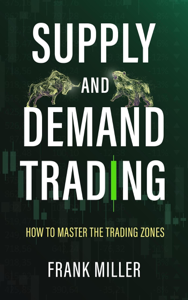
Supply and Demand Trading: How to Master the Trading ZonesFrank Miller

A GREAT WAY TO DANCE WITH BIG PLAYERS IN THE MARKET We've been familiar with the constant battles between the bulls and the bears in the financial markets that drives the price move every day. By understanding the core of market fluctuations, traders can prepare for the best trade opportunities and avoid market traps. Yet, it's NEVER an easy task. One of the most severe pitfalls among traders is the failure to determine which setups to give a go and which one to avoid. There are only a handful of worthwhile market signals out there for traders to consider. These setups are located in the trading zones where the BIG PLAYERS pay attention to, and there are true trade opportunities. A great way to make the best use of the trading zones is through identifying and analyzing the Supply and Demand Zones in the market. Supply and Demand Trading is a concept that digs in the very basic yet crucial elements of the market operation, whether in traditional or modern ones. With a simple yet effective approach, it deserves a thorough investigation by every Price Action trader . In this book, you'll learn: • How supply and demand are a perfect supplement to the traditional support/resistance levels; • What are the trading zones and how to find them on the chart; • The art of drawing supply and demand zones under different approaches; • A super-powerful way to identify a reliable trading zone; • How to combine candlestick patterns with supply and demand trading; • What is a flip zone and how to make the best use of this market formation? • How to trade reversal and continuation patterns using supply and demand theories; • Two ways of trading gaps in combination with the trading zones; • How to implement supply and demand trading with a powerful technical indicator; • The biggest secret in trading with the zones to secure a high winning rate; • The secret of long-term success in trading; Each of these points will be supported with multiple high-quality chart examples so that you will have no difficulty understanding what I convey in the book. Also, you will have a chance to learn about a very important tool that makes your trading a thousand times more convenient and effective . The supply and demand theories root in traditional microeconomics with no fancy and complicated technical aspects or mathematical formulas required. Therefore, whether you are an experienced trader with big compassion for price action or a complete newbie, this book is a perfect companion for the rest of your trading journey . So, if you are truly serious about who the BIG PLAYERS are and how to trade like a champion trader using the supply and demand trading methods, then click the Buy button.
10

How to Make Money Trading with Candlestick ChartsBalkrishna M. Sadekar

Japanese rice traders have successfully used candle signals to amass huge fortunes for nearly four centuries. Constantly refined and tested over time, candlestick signals are now being used the world over for trading all financial markets, including stocks, derivatives and currencies, etc. This book explains step-by-step how you can make money by trading the powerful and proven candlestick techniques. Here is how: ● Explanation of major candle signals; how to recognize them and use them effectively ● The underlying market psychology revealed by each candle formation ● How to combine candlestick signals with Western technical analysis to take advantage of high probability trades which generate explosive profits ● Stop loss settings for various candlestick signals for cutting losses. Master this and you will be way ahead of fellow traders ● How the use of candlesticks with technical analysis provides a simple mechanical trading system which eliminates emotional interference, panic and greed ● How to use candlestick charts for making money from longer term trading and investing ● PLUS: Proven, market-tested trading ideas tips and common mistakes to avoid based on the author's rich experience of trading stocks and options. This book will enable both new traders and experienced traders derive systematic and consistent profits from the market by adding candlestick charting to their trading arsenal. REVIEWS FOR THE BOOK "Educative addition to the technical trader's shelf." — The Hindu Business Line "Clearly explains and reinforces the message of each candlestick pattern, pointing out other details that can help determine success or failure at each occurrence. The real life examples are manifold, well chosen and amplify the lessons being taught. Highly recommended reading for traders in all markets to discover ways of profiting from candlestick trading." — Alan Northcott "Sadekar's book not only manages to live upto the expectations but probably excels them. Sadekar attempts to keep things simple, and targets the beginner to intermediate level technician as his target audience. Each type of reversal, consolidation and continuation pattern is tackled in individual chapters and illustrated liberally with charts of Indian stocks. The author leaves ample strategies for the not so active trader, also combining Dow theory tools like trend lines, oscillators and moving averages with the oriental techniques. This gives the reader an immediate advantage of getting the best of both the worlds. While all chapters are interesting read, chapters 11 & 12 are the highlights of the book as they lay out a simple but actionable game plan for a trader and investor. As if the overall package was not sweet enough, Sadekar has compiled a tear-away candlestick ready-reckoner at the end of the book to identify emerging patterns in real time. At its price, the book is a value buy. All in all, a must read book for every freshman candle sticks trader." — Vijay L. Bhambwani, Technical Analyst, CEO - BSPLIndia.com ABOUT THE AUTHOR Balkrishna M. Sadekar is the founder of Profitable Candlestick Charting LLC., an educational company providing training to stock traders in the proper use of candlestick charting and technical analysis. He is also a member of Technical Securities Analyst Association (TSAASF.org), a leading authority for technical analysis in the United States. With a Masters degree in Engineering, Sadekar has passionately blended technology with investor psychology analysis via candlestick charts. A trader for more than a decade, he has trained and continues training novice and experienced traders in correctly applying trading systems for profiting from equity markets. Sadekar resides in Richmond, VA in the US and can be reached via his website, www.ProfitableCandlestickCharting.com. With his books, Sadekar hopes to get Indian traders comfortable, confident and successful in the proper application of candlestick charting.
11

Foreclosure Investing For DummiesRalph R. Roberts, Joseph Kraynak & Kyle Roberts

Make foreclosure investing work for you with this practical and easy-to-understand guide Looking to kick start your own property management career? Check out Foreclosure Investing For Dummies, which will get you started buying foreclosed properties to turn into your own income property! In this book, you'll learn to navigate the complexities of home auctions, deal with emotional former homeowners, and how to handle renovations. You'll also get a heads-up on the foreclosure laws in all 50 states so you don't accidentally run afoul of any complicated regulations. Foreclosure Investing For Dummies shows you how to: Locate properties for sale and identify associated opportunities and risks Buy properties below market value at auction, from lending institutions, and from government agencies Fix up, renovate, and sell or lease your new property for a profit This hands-on guide can help anyone make foreclosure investing work. So, grab a copy of Foreclosure Investing For Dummies, roll up your sleeves, and get going!
12

Value Investing: The Buffett Techniques Of Accumulating Wealth With Practical Strategies To Always Choose The Intelligent InvestmentKevin D. Peterson

Learn how to buy assets that have a higher value than the price you can buy them for. The assets will continue to make you wealthier even though you do not put in any additional time and energy. The Warren Buffett strategy is a long term value investing approach passed down from Benjamin Graham's school of value. Buffett is considered to be one of the greatest investors of all time. His investing strategy, value, and principles can be used to help investors make good investment decisions. Don't let fear and greed change your investing criteria and values. Avoid being overwhelmed by outside forces that affect your emotions. Never sell into panic. Value investing is an investment strategy where stocks are selected that trade for less than their intrinsic values. Value investors actively seek stocks they believe the market has undervalued. Investors who use this strategy believe the market overreacts to good and bad news, resulting in stock price movements that do not correspond with a company's long-term fundamentals, giving an opportunity to profit when the price is deflated. Here Is A Preview Of What You'll Read... Understanding What Value Investing Is? The Economics Of Value Investing Growth Versus Value Investing Elective Methods Of Determining Value New Price-Earnings Ratio Value Investing Strategy Criticism Of Value Investing And much, much more! Download your copy today! Take action today and download this book now!
13

Emotional Discipline in Trading: Psychology of Day Trading and Swing TradingRajesh Kahar & Rajesh. K

Are Emotions Eating Away at Your Trading Profits? Successful trading doesn't rely only on a great strategy—it also depends on strong trading psychology and discipline. Whether you want to master day trading psychology or understand swing trading psychology, this book is designed to give you the mental framework needed to stay consistently profitable. This book is for everyone—from beginners to experienced traders. You'll discover that the very first step to beating the market is learning how to master yourself. Inside this book, you'll learn: •Practical techniques to gain emotional control in trading. •How to identify and manage emotions like fear and greed. •How to develop a successful trading mindset that keeps you disciplined. •A deeper understanding of the psychology behind profitable trading. •The importance of risk management and the art of becoming a confident trader. Don't let your emotions dictate your decisions. Become a trader who follows a plan, not impulses. Transform your trading journey today. Now it's your turn—are you ready to discover the mindset that sets you apart from the crowd?
14

股票是在漲什麼【經典紀念版】布萊恩.費羅迪

「一本簡單不廢話,而且很實用的投資指南。 帶領你理解史上最偉大的財富製造機器。」 ──《致富心態》摩根.豪瑟 強力推薦── ☆ 美國投資圈最受推崇的致富教練 ☆ 用最簡單的故事,帶你看懂市場上最重要的事! 投資可以優雅又簡單,也可以殘忍又複雜。 懂股市的人享受複利的喜悅, 沒基礎又貪心的人就等著隨時睡公園。 天堂與地獄的關鍵,全在一杯咖啡背後的故事。
15

The Little Book of Common Sense InvestingJohn C. Bogle

The best-selling investing "bible" offers new information, new insights, and new perspectives The Little Book of Common Sense Investing is the classic guide to getting smart about the market. Legendary mutual fund pioneer John C. Bogle reveals his key to getting more out of investing: low-cost index funds. Bogle describes the simplest and most effective investment strategy for building wealth over the long term: buy and hold, at very low cost, a mutual fund that tracks a broad stock market Index such as the S&P 500. While the stock market has tumbled and then soared since the first edition of Little Book of Common Sense was published in April 2007, Bogle's investment principles have endured and served investors well. This tenth anniversary edition includes updated data and new information but maintains the same long-term perspective as in its predecessor. Bogle has also added two new chapters designed to provide further guidance to investors: one on asset allocation, the other on retirement investing. A portfolio focused on index funds is the only investment that effectively guarantees your fair share of stock market returns. This strategy is favored by Warren Buffett, who said this about Bogle: "If a statue is ever erected to honor the person who has done the most for American investors, the hands-down choice should be Jack Bogle. For decades, Jack has urged investors to invest in ultra-low-cost index funds. . . . Today, however, he has the satisfaction of knowing that he helped millions of investors realize far better returns on their savings than they otherwise would have earned. He is a hero to them and to me." Bogle shows you how to make index investing work for you and help you achieve your financial goals, and finds support from some of the world's best financial minds: not only Warren Buffett, but Benjamin Graham, Paul Samuelson, Burton Malkiel, Yale’s David Swensen, Cliff Asness of AQR, and many others. This new edition of The Little Book of Common Sense Investing offers you the same solid strategy as its predecessor for building your financial future. Build a broadly diversified, low-cost portfolio without the risks of individual stocks, manager selection, or sector rotation. Forget the fads and marketing hype, and focus on what works in the real world. Understand that stock returns are generated by three sources (dividend yield, earnings growth, and change in market valuation) in order to establish rational expectations for stock returns over the coming decade. Recognize that in the long run, business reality trumps market expectations. Learn how to harness the magic of compounding returns while avoiding the tyranny of compounding costs. While index investing allows you to sit back and let the market do the work for you, too many investors trade frantically, turning a winner's game into a loser's game. The Little Book of Common Sense Investing is a solid guidebook to your financial future.
16

Pioneering Portfolio ManagementDavid F. Swensen

In the years since the now-classic Pioneering Portfolio Management was first published, the global investment landscape has changed dramatically -- but the results of David Swensen's investment strategy for the Yale University endowment have remained as impressive as ever. Year after year, Yale's portfolio has trumped the marketplace by a wide margin, and, with over $20 billion added to the endowment under his twenty-three-year tenure, Swensen has contributed more to Yale's finances than anyone ever has to any university in the country. What may have seemed like one among many success stories in the era before the Internet bubble burst emerges now as a completely unprecedented institutional investment achievement. In this fully revised and updated edition, Swensen, author of the bestselling personal finance guide Unconventional Success, describes the investment process that underpins Yale's endowment. He provides lucid and penetrating insight into the world of institutional funds management, illuminating topics ranging from asset-allocation structures to active fund management. Swensen employs an array of vivid real-world examples, many drawn from his own formidable experience, to address critical concepts such as handling risk, selecting advisors, and weathering market pitfalls. Swensen offers clear and incisive advice, especially when describing a counterintuitive path. Conventional investing too often leads to buying high and selling low. Trust is more important than flash-in-the-pan success. Expertise, fortitude, and the long view produce positive results where gimmicks and trend following do not. The original Pioneering Portfolio Management outlined a commonsense template for structuring a well-diversified equity-oriented portfolio. This new edition provides fund managers and students of the market an up-to-date guide for actively managed investment portfolios.
17

The Madness of MarketsAlex Edmans

A groundbreaking look at what drives even the smartest investors to make irrational choices and a practical roadmap for profiting when the market loses its mind—from one of the world’s leading finance professors “A fascinating and indispensable guide to the hidden psychology that drives markets.”—Annie Duke, decision strategist and author of Thinking in Bets and Quit Why did Isaac Newton lose a fortune in the South Sea Bubble? Why did people spend millions on cartoon apes during the NFT frenzy? Why does the stock market fall when a national soccer team loses, or rise on a sunny day? In this lively, eye-opening, and highly practical book, Alex Edmans reveals the hidden psychological forces that push markets away from logic—and create opportunities for those who stay sane while others panic. Drawing on cutting-edge studies and his more than twenty years at the intersection of academia and Wall Street, Edmans explains why investors chronically overreact , underreact , and misreact —and how these mistakes lead to bubbles, crashes, hype cycles, and portfolio wipeouts. But The Madness of Markets isn’t just about spotting irrationality—it’s about outsmarting it. Edmans shows you how to think sharper, invest smarter, dodge predictable traps, and recognize when the crowd has lost the plot. Playfully rigorous and packed with unforgettable stories—from Reddit frenzies to CEO ego trips to World Cup upsets— The Madness of Markets offers an accessible yet thorough guide for anyone looking to make smarter decisions in a noisy financial world. This book is for anyone with a pension, an IRA, or a long-term stake in the market—whether you’re chasing crypto highs or simply protecting your retirement while the world spins out of control.
18

Mind Over MarketsJames F. Dalton, Eric T. Jones & Robert B. Dalton

A timely update to the book on using the Market Profile method to trade Emerging over twenty years ago, Market Profile analysis continues to realize a strong following among active traders. The approach explains the underlying dynamics and structure of markets, identifies value areas, price rejection points, and measures the strength of buyers and sellers. Unlike more conventional forms of technical analysis, Market Profile is an all-encompassing approach, and Mind Over Markets, Updated Edition provides traders with a solid understanding of it. Since the first edition of Mind Over Markets —considered the best book on applying Market Profile analysis to trading—was published over a decade ago, much has changed in the worlds of finance and investing. That's why James Dalton, a pioneer in the popularization of Market Profile, has returned with a new edition of this essential guide. Written to reflect today's dynamic market conditions, Mind Over Markets, Updated Edition clearly puts this unique method of interpreting market behavior and identifying trading/investment opportunities in perspective. Includes new chapters on Market Profile-based trading strategies, using Market Profile in connection with other market indicators, and much more Explains how the Market Profile approach has evolved over the past twenty-five years and how it is used by contemporary traders Written by a leading educator and authority on the Market Profile One of the key elements that has long separated successful traders from the rest is their intuitive understanding that time regulates all financial opportunities. The ability to record price information according to time has unleashed huge amounts of useful market information. Mind Over Markets, Updated Edition will show you how to profitably put this information to work for you.
19

Dot.ConJohn Cassidy

The history of the dot-com stock rise and fall from an economics reporter and staff writer for The New Yorker . The Internet stock bubble wasn't just about goggle-eyed day traders trying to get rich on the Nasdaq and goateed twenty-five-year-olds playing wannabe Bill Gates. It was also about an America that believed it had discovered the secret of eternal prosperity: it said something about all of us, and what we thought about ourselves, as the twenty-first century dawned. Business journalist John Cassidy's Dot.con brings this tumultuous episode to life. Moving from the Cold War Pentagon to Silicon Valley to Wall Street and into the homes of millions of Americans, Cassidy tells the story of the great boom and bust in an authoritative and entertaining narrative. Featuring all the iconic figures of the Internet era—Marc Andreessen, Jeff Bezos, Steve Case, Alan Greenspan, and many others—and with an afterword on the aftermath of the bust— Dot.con is a panoramic and stirring account of human greed and gullibility. "Required reading for generations of B-school students as yet unborn. . . . A marvelous book." — Wall Street Journal "Deserves to be the boom's standard account. It is informative, perceptive, and gracefully written." — New Republic "The first good book about one of capitalism's most embarrassing debacles." —Salon.com
20

100 BaggersChristopher W. Mayer

This book is about 100-baggers. These are stocks that return $100 for every $1 invested. That means a $10,000 investment turns into $1 million. Chris Mayer can help you find them. It sounds like an outrageous quest with a wildly improbable chance of success. But when Mayer studied 100-baggers of the past, definite patterns emerged. In 100-Baggers, you will learn: -The key characteristics of 100-baggers -Why anybody can do this (It is truly an everyman's approach. You don't need an MBA or a finance degree. Some basic financial concepts are all you need.) -A number of crutches or techniques that can help you get more out of your stocks and investing The emphasis is always on the practical, so there are many stories and anecdotes to help illustrate important points. You should read this book if you want to get more out of your stocks. Even if you never get a 100-bagger, this book will help you turn up big winners and keep you away from losers and sleepy stocks that go nowhere. After reading 100-Baggers, you will never look at investing the same way again. It will energize and excite you about what is possible.
21

Mastering The Market CycleHoward Marks

A NEW YORK TIMES, WALL STREET JOURNAL , AND USA TODAY BESTSELLER Named one of the Best Business Books of 2018 by Business Insider The legendary investor Howard Marks shows how to identify and master the cycles that govern the markets. We all know markets rise and fall, but when should you pull out, and when should you stay in? The answer is never black or white, but is best reached through a keen understanding of the reasons behind the rhythm of cycles. Confidence about where we are in a market cycle comes when you learn the patterns of ups and downs that influence not just economics, markets and companies, but also human psychology and the investing behaviors that result. If you study past cycles, understand their origins and remain alert for the next one, you will become keenly attuned to the investment environment as it changes. You’ll be aware and prepared while others get blindsided by unexpected events or fall victim to emotions like fear and greed. By following Marks’s insights—drawn in part from his iconic memos over the years to Oaktree’s clients—you can master these recurring patterns to have the opportunity to improve your results. In Mastering the Market Cycle , Marks reveals his framework for superior investing, offering a practical guide to: Investor Psychology: Learn to identify the emotional pendulum swings between euphoria and fear that drive market extremes, and how to use them to your advantage. Cycle Positioning: Calibrate your portfolio by learning when to be aggressive and when to be defensive, based on a keen awareness of where we stand in the current economic cycle. The Credit Cycle: Understand why the credit cycle is the most powerful and volatile force, and what the “credit window” tells you about market health and risk management. Getting the Odds on Your Side: Move beyond simple forecasting to a more sophisticated understanding of tendencies and probabilities, giving you an edge while others are blindsided.
22

How to Day Trade: The Plain TruthRoss Cameron

How to Day Trade: The Plain Truth is a book of straight talk about what it really takes to become a day trader, and how to learn what you need to know. Do you think you know what day trading is really about? If so, where did you get your information? Social media is full of people claiming that they made a killing on a stock. Just as many people will warn you to stay away from day trading because they lost everything on some "sure thing" that went bad in a hurry. So what should you believe? How to Day Trade: The Plain Truth is the first book to talk candidly and in detail about how to become a day trader. It's written by me, Ross Cameron, the guy who turned $583 into more than $10 million. Though my results are not typical, they are fully verified and audited. I also have over one million subscribers who tune into my YouTube channel to watch me trade. They see both my winning trades and my losing ones. Yes, even I have days where I lose money. That's just the reality, and that's what I want to share with you. This book is unique among day trading books in three ways: First, it's written by someone with documented success from more than 20,000 trades. Sure there are lots of people on social media calling themselves "day traders" who will try to impress you with one amazing trade. Insider tip: You should only be impressed if they offer you an independently audited record of ALL their trades: the winning ones AND the losing ones. Second, of all the books for day traders, this one is unique: I clear away a lot of "head trash" that comes from social media, friends, and family who may have opinions but no real facts or deep experience with day trading. It addresses questions and opinions that most people have about day trading, like: "If it is possible to day trade profitably, why haven't the giant trading firms taken it over and monopolized it by this point?" "If it's possible for regular people to make consistent money by day trading, then why isn't everyone doing it?" "Day trading is gambling. Nothing more, nothing less." "What role does luck have in day trading?" "I have a hard time believing that you will tell me exactly the methods you use to trade. If you did that, wouldn't you lose your competitive edge?" "I'm a gamer who's incredibly fast with the keyboard. Why can't I skip all the concepts and learning, and simply follow you as you trade?" You will get specific, honest answers to all of these questions and more. The third thing that makes this book unique is I have identified 20 specific "guardrails" over my many years of trading. These are rules I follow, plus some I wish I knew when I was starting out. They are incredibly useful to keep in mind during the heat of trading-and it does get hot. If you're looking for day trading books for beginners, this is the book to get. Plus if you feel like you're not a beginner but your day trading is going nowhere, this could be the book to have in order to get you back on track. As important as charts and financial ratios are, those things come later. If you're thinking about day trading for a living, what you need to know first is whether day trading fits your personality, and how to avoid the biggest myths and mistakes that will cost you time and money. Real day trading is not anything like what you see on social media. After you read this book, you'll know why. You'll also have a solid roadmap of day trading strategies to take, if you decide to explore this amazing profession.
23

Family WealthJames E. Hughes, Jr.

The landmark book that changed the way exceptional families think about their heritage, their wealth, and their legacy to future generations-- now revised and expanded. Every family, looking at the next generation, hopes to confer advantages that are more than just material and financial--to inculcate character and leadership, to inspire creativity and enterprise, to help all family members find and follow their individual callings, and to avoid the financial dependency and loss of initiative that can all too often be an unwanted consequence of financial success. Yet many families never succeed in realizing that vision, much less sustaining it for three, four, or five generations and beyond. James Hughes has thought deeply about these challenges, and his insights are at once practical and profound. For more than three decades, he has personally guided multiple generations of families in creating strategies to preserve their human and intellectual capital as well as their financial assets. His teachings synthesize insights from psychology, anthropology, political history, philosophy, economic theory, and the law, with examples ranging from Aristotle to cutting-edge social science theory. His ideas have been taken up by numerous exceptional families, by their advisers, and by scores of authors, practitioners, and academics who have found value in the methods he pioneered. The first edition of this book, privately published, became a word-of-mouth classic. Now, Hughes has updated and substantially expanded it with new chapters that challenge conventional notions of wealth and offer guidelines for conserving family assets in the broadest senses. Filled with tested principles and practices for family governance and joint decision making, it is a rich source of workable wisdom that family members can put into practice today, to the enduring benefit and gratitude of future generations.
24

The Book on Rental Property InvestingBrandon Turner

Fast-track your way to financial freedom with this bestselling guide to finding and funding profitable real estate business deals. Are you ready to discover a safe and fast path to financial freedom? Brandon Turner, bestselling author and longtime host of The BiggerPockets Podcast , will show you how to achieve your goals by finding incredible real estate investment opportunities. With a wealth of in-depth advice, The Book on Rental Property Investing shares the secret strategies that will help you build high-margin cash flow across your real estate portfolio. Whether you’re a beginner or looking for an advanced guide, this valuable book will help you learn how to create an profitable and practical plan, find incredible deals, analyze properties, build a team, finance rentals, and much more―everything you need to start making millions from your investments. Inside, you’ll discover: Why many real estate investors fail, and how you can ensure you don’t! Creative ways to find incredible deals in any market How to achieve property management success without touching a toilet, paintbrush, or broom Unique strategies for financing rentals, even with limited cash flow How to maximize your wealth during tax season And so much more!
25

Common Stocks and Uncommon Profits and Other WritingsPhilip A. Fisher & Ken Fisher

Widely respected and admired, Philip Fisher is among the most influential investors of all time. His investment philosophies, introduced almost forty years ago, are not only studied and applied by today's financiers and investors, but are also regarded by many as gospel. This book is invaluable reading and has been since it was first published in 1958. The updated paperback retains the investment wisdom of the original edition and includes the perspectives of the author's son Ken Fisher, an investment guru in his own right in an expanded preface and introduction "I sought out Phil Fisher after reading his Common Stocks and Uncommon Profits ...A thorough understanding of the business, obtained by using Phil's techniques...enables one to make intelligent investment commitments." — Warren Buffet
26

El inversor inteligenteBenjamin Graham

A lo largo de los años, la evolución del mercado ha comprobado lo sabias que han sido las estrategias enseñadas por Graham. A la vez que conserva la integridad del texto original, esta edición revisada incluye comentarios actualizados del famoso periodista financiero Jason Zweig, cuya perspectiva incorpora las realidades del mercado presente, traza paralelismos entre los ejemplos de Graham y los titulares financieros actuales, y brinda a los lectores una comprensión más plena de cómo hacer para aplicar dichos principios. Fundamental e indispensable, El inversor inteligente es el libro más importante que usted leerá jamás sobre cómo alcanzar sus objetivos en lo financiero.
27

The Birth of a BuildingBen Stevens

We spend most of our lives in buildings and see new ones being created around us all the time. But the number of people and disciplines involved in a building's creation make it hard to understand the process as a whole. The Birth of a Building is an introduction to those aspects of finance, law, urban planning, architecture, engineering, construction, and real estate development which underlie this fascinating event. Part One focuses on the "birds and the bees," explaining the economic story which motivates people to create new buildings in the first place. Part Two focuses on the longer pregnancy and delivery process, walking you through the specific stages that a building project will pass through. Every chapter begins with a simple analogy from everyday life that helps the total beginner relate to the subject matter. And because it takes an interdisciplinary approach, The Birth of a Building can serve as an introduction to many different fields.
28

Inside the Black BoxRishi K Narang

Master the basics and intricacies of quant and high-frequency trading with the latest edition of this accessible and widely-read guide In the newly revised third edition of Inside the Black Box: A Simple Guide to Systematic Investing, veteran practitioner and investor Rishi K Narang delivers another insightful discussion of how quantitative and algorithmic trading strategies work in non-mathematical terms. As with prior editions, this third edition is full of timeless concepts and timely updates. Supplemented by compelling anecdotes and real-world stories, the book explains the most relevant developments in the discipline since the publication of the second edition in 2013. You'll find out about the explosion in machine learning for alphas, signal mixing, data extraction, and execution, as well as the proliferation of alt data and a discussion of how to use it appropriately. You'll also discover: Updated discussions of approaches to research Newer and more effective approaches to portfolio optimization The frontiers of quantitative investing An essential and accessible treatment of a complicated and of-the-moment topic, Inside the Black Box remains the gold standard for non-mathematicians seeking to understand the ins and outs of one of the most fascinating and lucrative trading strategies, as well as quants from disciplines outside of finance looking for a conceptual framework on which to build profitable systematic trading strategies.
29

Swing Trading For DummiesOmar Bassal

Learn how to maximize profits and minimize risks trading over the short term Swing Trading For Dummies introduces you to a trading methodology designed to generate big profits in the short term. Unlike buy and hold investing, Swing Traders endeavor to enter a stock at the precise moment a major uptrend begins and exit for a large profit a few weeks or months later. In order to achieve this result, Swing Trading For Dummies covers the tools you need to get up and running as a trader before moving on to the two main analysis techniques swing traders rely upon: technical analysis and fundamental analysis. These two analysis techniques can be combined to maximize the chances of a successful trade. But no one is perfect, and the savvy swing trader must have a comprehensive risk management plan to deal with trades that fail to launch. New in this update to Swing Trading for Dummies is material on the types of positive catalysts a trader should look for to enter a trade, the best way to trade earnings reports, swing trading cryptocurrencies and why you should avoid investing in banking stocks. Learn how swing trading can generate profits in a short period of time Identify the most attractive opportunities and when to buy them Avoid the common mistakes that sink many novices Manage risk and set yourself up for success For new and seasoned investors looking for a comprehensive and trusted reference on swing trading, this Dummies guide is the perfect solution.
30

Options Trading 101James Royal

Minimize risk and maximize profit with options trading and explore the ins and outs of this popular investment strategy in this engaging, informative, and easy-to-understand guide. Want to make money options trading but don’t know where to start? Are you unsure as to what options trading even is? Is options trading the right strategy for you? Options Trading 101 has the answers to all these questions and more. From explaining what options are and how they differ from stocks in addition to going over key terms, such as calls, puts, strike price, and expiration dates, you will get a crash course in options trading to help you start making money fast. You’ll also find fundamental strategies for trading options, including buying calls and puts, and the risks and rewards associated with each. To build on a solid foundation, the book offers information on technical and fundamental analysis, helping you understand how to evaluate market trends and make informed decisions. Additionally, risk management techniques and the importance of setting trading goals are emphasized to ensure long-term success. By the end of the book, you’ll be confident in your understanding of options trading and be ready to begin your trading journey with a clean and informed strategy.
31

Technical Analysis of the Financial MarketsJohn J. Murphy

John J. Murphy has now updated his landmark bestseller Technical Analysis of the Futures Markets, to include all of the financial markets. This outstanding reference has already taught thousands of traders the concepts of technical analysis and their application in the futures and stock markets. Covering the latest developments in computer technology, technical tools, and indicators, the second edition features new material on candlestick charting, intermarket relationships, stocks and stock rotation, plus state-of-the-art examples and figures. From how to read charts to understanding indicators and the crucial role technical analysis plays in investing, readers gain a thorough and accessible overview of the field of technical analysis, with a special emphasis on futures markets. Revised and expanded for the demands of today's financial world, this book is essential reading for anyone interested in tracking and analyzing market behavior.
32

The Motley Fool Investment Guide: Third EditionTom Gardner & David Gardner

A completely revised and updated edition of an investing classic to help readers make sense of investing today, full of “solid information and advice for individual investors” ( The Washington Post ). Today, anyone can be an informed investor, and once you learn to tune out the hype and focus on meaningful factors, you can beat the Street. The Motley Fool Investment Guide , completely revised and updated with clear and witty explanations, deciphers all the current information—from evaluating individual stocks to creating a diverse investment portfolio—making investing more approachable for beginners. David and Tom Gardner have accessible investing ideas for you, no matter how much time or money you have. This new edition of The Motley Fool Investment Guide is designed for today’s investor, sophisticate and novice alike, with the latest information on: -Finding high-growth stocks that will beat the market over the long term -Identifying volatile young companies that traditional valuation measures may miss -Using online sources to locate untapped wellsprings of vital information The Motley Fool rose to fame in the 1990s, based on its early recommendations of stocks such as Amazon, PayPal, eBay, and Starbucks. Now this revised edition is tailored to help investors tackle today’s market. “If you’ve been looking for a basic book on investing in the stock market, this is it...The Gardners help empower the amateur investor with tools and strategies to beat the pros” ( Chicago Tribune ).
33

The Unlucky Investor's Guide to Options TradingJulia Spina & Tom Sosnoff

An approachable guide to sustainable options trading, minimal luck needed. Traders who are successful long-term do not rely on luck, but rather their ability to adapt, strategize, and utilize available tools and information. Modern markets are becoming increasingly accessible to the average consumer, and the emergence of retail options trading is opening a world of opportunities for the individual investor. Options are highly versatile and complex financial instruments that were exclusive to industry professionals until recently. So where should beginners start? The Unlucky Investor's Guide to Options Trading breaks down the science of options trading to suit interested traders from any background. Using statistics and historical options data, readers will develop an intuitive understanding of the potential risks and rewards of options contracts. From the basics of options trading to strategy construction and portfolio management, The Unlucky Investor's Guide to Options Trading guides readers through the world of options and teaches the crucial risk management techniques for sustainable investing.
34

Summary of Mark Douglas's The Disciplined TraderSlingshot Books

Excerpt From Summary of Mark Douglas's The Disciplined Trader #1 What separates the majority of traders who lose money from the minority of traders who make money is psychological discipline. The majority of traders get discouraged and give up after experiencing a few losing trades. It takes a psychological transformation for a trader to realize that trading is not about making money every single day, but about making money consistently over long periods of time. #2 Today's successful traders started out without maps, signposts, or guidelines, and had to figure everything out through trial and error.
35

Understanding OptionsMichael Sincere

Illustrates profit and loss results for simple options and option spreads Explains the Greeks and their importance Outlines how options offer four ways to approach the market Includes a step-by-step walk-through of placing an order
36

How to Invest in Gold & Silver: A Complete Guide With a Focus on Mining StocksDon Durrett

Want to invest in gold and silver, but aren't sure how? How to Invest in Gold and Silver is a practical guide for investors who are new to the emerging gold and silver markets. Written in clear layman's terms, this forward-thinking book is packed with information to help gold and silver investors navigate an exciting, timely and largely unexplored market. How to Invest in Gold and Silver includes: – An overview that explains the wisdom of gold and silver investments in today's economic environment. – Indispensible information on how to manage the risk of gold and silver assets. – A step-by-step strategy to investing in bullion and coins. – Clear explanations on using ETFs (Electronic Trading Funds) and options. – The pros and cons of investing in major, mid-tier and junior mining companies, and a how-to methodology for making informed choices for the best gains. In his pioneering work, author Don Durrett shares the details of his own systematic, successful approach to investing in gold and silver. This easy to follow book shows investors how to take advantage of the rising prices of precious metals using a balanced portfolio of gold and silver assets. Armed with this knowledge you will be able to invest with confidence.
37

Why Moats MatterHeather Brilliant & Elizabeth Collins

Incorporate economic moat analysis for profitable investing Why Moats Matter is a comprehensive guide to finding great companies with economic moats, or competitive advantages. This book explains the investment approach used by Morningstar, Inc., and includes a free trial to Morningstar's Research. Economic moats—or sustainable competitive advantages—protect companies from competitors. Legendary investor Warren Buffett devised the economic moat concept. Morningstar has made it the foundation of a successful stock-investing philosophy. Morningstar views investing in the most fundamental sense: For Morningstar, investing is about holding shares in great businesses for long periods of time. How can investors tell a great business from a poor one? A great business can fend off competition and earn high returns on capital for many years to come. The key to finding these great companies is identifying economic moats that stem from at least one of five sources of competitive advantage—cost advantage, intangible assets, switching costs, efficient scale, and network effect. Each source is explored in depth throughout this book. Even better than finding a great business is finding one at a great price. The stock market affords virtually unlimited opportunities to track prices and buy or sell securities at any hour of the day or night. But looking past that noise and understanding the value of a business's underlying cash flows is the key to successful long-term investing. When investors focus on a company's fundamental value relative to its stock price, and not where the stock price sits today versus a month ago, a day ago, or five minutes ago, investors start to think like owners, not traders. And thinking like an owner will makes readers better investors. The book provides a fundamental framework for successful long-term investing. The book helps investors answer two key questions: How can investors identify a great business, and when should investors buy that business to maximize return? Using fundamental moat and valuation analysis has led to superior risk-adjusted returns and made Morningstar analysts some of the industry's top stock-pickers. In this book, Morningstar shares the ins and outs of its moat-driven investment philosophy, which readers can use to identify great stock picks for their own portfolios.
38

Bidding to BuyDavid Osborn & Aaron Amuchastegui

Welcome to the world of buying foreclosed homes at auction—a real estate strategy that lets you remove the middleman, decrease your competition, and buy at a discount. Bidding for properties on the courthouse steps while competing in real time with other investors is a thrilling experience. There’s nothing like it in the world of real estate, but there’s also a lot to learn. With dozens of insider auction secrets that are proven to help maximize returns, Bidding to Buy will show you the skills you need to successfully bid at auction, then turn a healthy profit on your investment. Successfully buying foreclosures isn’t a matter of luck, and it isn’t for insiders only. However, it does require a process—one that can be repeated for optimal returns. In this book, you’ll find a full blueprint of the foreclosure process, including the repeatable five-step method that the authors have used to buy thousands of properties. Discover a new kind of real estate investment and uncover profits on your local courthouse steps! Inside, you’ll learn how to: Find properties before they are broadly exposed to the marketUnderstand the entire foreclosure process and how it differs from state to stateConduct complete title research and develop an eye for red flagsNavigate the potential risks and pitfalls behind a live auctionAccess property listings and early posting dataBuild an accurate financial analysis on any available propertyAcquire creative and alternative financing methods, including no-cash solutionsComplete critical post-auction steps, such as evicting tenants
39

Real Estate Investing All-in-One For DummiesThe Experts at Dummies

Build wealth through real estate Real Estate Investing All-in-One For Dummies will show new and seasoned real estate investors how to make smart decisions. With seven books in one, this complete resource will teach you how to purchase real estate, flip houses, invest in commercial real estate and foreclosures, sell your house, buy real estate internationally, and more. We even explain the ins and outs of short-term rentals like Airbnb, so all your passive income options are covered. With this book, you can start investing in real estate quickly and easily, thanks to user-friendly information and expert tips that will help you avoid costly mistakes. It’s your one-stop resource for all things real estate. Learn how to buy and sell real estate, including how to find the best deals Determine whether flipping houses or short-term rental management is for you Maximize your earnings and minimize your tax bill in real estate investment Extend your reach outside the United States by investing in real estate globally This is the perfect Dummies guide for amateur real estate investors who need a hand getting started, and for seasoned investors looking to up their game with commercial, international, and other investment strategies.
40

The Complete Guide to Option Selling, Second EditionJames Cordier & Michael Gross

The growing popularity of selling options is undeniable, yet it remains one of the least understood concepts in the trading world. This clear and engaging guide helps you enter the market with the confidence you need and generate profits with a consistency that may surprise you. Now in its second edition, The Complete Guide to Option Selling is the only book that explores selling options exclusively. Since its original publication in 2004, much has changed in the world of options, and the authors have provided key updates to help you take advantage of these changes. You’ll find all the information you’ll need to start writing options profitably in equities, stock indexes, and commodities and maximize your returns, minimize your risk, and even manage “black swan” events. With more than 38 years combined experience in options trading, the authors explain: Basic mechanics of how professionals sell time premium The misunderstood subject of margins on short options Myths about option writing— and why they still circulate Key factors to consider when building an optionselling portfolio How to control risk—the right way Effective, time-tested strategies for selling premium Common mistakes beginners make and how to avoid them Option selling provides a high probability of success that is difficult, if not impossible, toachieve in any other investment. The Complete Guide to Option Selling illustrates how to take full advantage of this unique approach and make it a profitable, high-yield component of your overall portfolio. Don’t listen to the popular myth that option selling is only for professionals. The secret is out, and individual investors can now run with it. Read The Complete Guide to Option Selling and learn how you can level the playing field with the big guys. It’s a lot easier than you may think.
41

Digital Assets and Crypto for InvestorsVanessa Grellet

A practical roadmap for building wealth through cryptocurrency and digital asset investing Digital Assets and Crypto for Investors: Your Practical Guide to Building a Diversified Portfolio explains the complexities of the cryptocurrency space in clear, accessible language. Written by Vanessa Grellet, Managing Partner of a multi-strategy digital asset investment firm with 15 years of experience on Wall Street and over 10 years in Digital Assets, this guide delivers the strategies and tools needed to make informed decisions in the digital asset economy. The authors draw on first-hand success stories and decades of combined experience in traditional finance and cryptocurrency markets. Whether you're an individual investor or wealth manager, you'll learn which market factors to monitor, how to evaluate investment opportunities, and proven approaches for balancing traditional holdings with digital assets in a diversified portfolio. Readers will also discover: Insights from practitioners who have navigated both Wall Street institutions and the emerging cryptocurrency marketplace with documented success Clear explanations of Bitcoin, Ethereum, and other cryptocurrencies designed for investors without technical backgrounds to understand quickly Practical strategies for identifying high-growth digital assets while managing risk within a diversified investment portfolio approach Tools and frameworks for evaluating cryptocurrency opportunities based on real market factors rather than speculation or hype Guidance on portfolio allocation that bridges traditional investment principles with the unique characteristics of digital asset markets Digital Assets and Crypto for Investors is essential reading for retail investors and professionals with portfolios seeking high-growth opportunities, wealth managers exploring emerging asset classes, and anyone looking to understand how cryptocurrency fits within a balanced, long-term investment strategy.
42

Understanding Options 2EMichael Sincere

THE OPTIONS INVESTING BESTSELLER--WITH CRITICAL NEW INSIGHT FOR TODAY'S TUMULTOUS MARKETS Written in an accessible, easy-to-read style, this new edition of Understanding Options provides everything you need to get started on the right foot in the increasingly popular options market. You'll learn what options are and how they work, their pros and cons, their relationship with stocks, and how to use them to gain leverage, generate extra income, and protect against adverse price movements. Understanding Options covers everything that has made it the go-to guide for novice investors--plus it has brand-new information and features, including: Updated facts, charts, and figures Expanded coverage of collars, credit and debit spreads,mini-options, the Greeks, and protective puts Key strategy insights from master options traders A critical look at trading options on ETFs Options simply are not as confusing as the other books make them seem. Written specifically for the novice, Understanding Options is the best, most inviting guide available for building a solid foundation in options investing.
43

Day Trading For DummiesAnn C. Logue

Conquer the markets and become a successful day trader Day trading is a fast-paced, sometimes risky form of investment. Day Trading For Dummies gives you the information you need to get started with this quick-action form of trading for income and maintain your assets. Learn how the market works, how to read and predict price movements, and how to minimize your loss potential, so you can manage your money strategically and create your day trading plan. Expert author Ann Logue will set you on the path to success, showing you the techniques successful day traders use to profit. This new edition covers crypto, AI, meme stocks, new trading options, and the latest strategies. By following market indicators and doing the essential research, you can avoid making critical mistakes and instead make smart trades that earn money. Learn the basics of how the stock market works and master the concepts specific to day trading Understand the risks involved in fast-paced day trading and maximize your profit potential without going broke Discover new methods and ideas, including cryptocurrency trading and FOMO risk Earn income and get tips for minimizing your tax bill at the end of the year Day Trading For Dummies will teach you a lot about day trading in only a little time. Beginning to intermediate investors will love this jargon-free guide to deciding if day trading is for you and making the best money you can.
44

Richer, Wiser, HappierWilliam Green

“One of the best investing books ever written.” —Charlie Munger From an award-winning financial journalist, a fresh and insightful book that draws on interviews with more than forty of the world’s super-investors to demonstrate that the keys to building wealth also apply to everyday life. Billionaire investors. If we think of them, it’s with a mixture of awe and suspicion. Clearly, they possess a kind of genius—the proverbial Midas Touch. But are the skills they possess transferable? And do they have anything to teach us besides making money. In Richer, Wiser, Happier , William Green draws on interviews that he’s conducted over twenty-five years with many of the world’s greatest investors. As he discovered, their talents extend well beyond the financial realm. The most successful investors are mavericks and iconoclasts who question conventional wisdom and profit vastly from their ability to think more rationally, rigorously, and objectively. They are master game players who consciously maximize their odds of long-term success in markets and life, while also minimizing any risk of catastrophe. They draw powerful insights from many different fields, are remarkably intuitive about trends, practice fanatical discipline, and have developed a high tolerance for pain. As Green explains, the best investors can teach us not only how to become rich, but how to improve the way we think, reach decisions, assess risk, avoid costly errors, build resilience, and turn uncertainty to our advantage. Green ushers us into the lives of more than forty super-investors, visiting them in their offices, homes, and even their places of worship—all to share what they have to teach us. From Sir John Templeton to Charlie Munger, Jack Bogle to Ed Thorp, Will Danoff to Mohnish Pabrai, Joel Greenblatt to Howard Marks, Green explains how they think and why they win. Profound, practical, and “unexpectedly illuminating” (Peter Diamandis), Richer, Wiser, Happier provides “many nuggets of wisdom” ( The Washington Post ) that will enrich you both financially and personally.
45

Money Making Skills by Warren BuffetWarren Buffett

<p><b>Money Making Skills by Warren Buffett by Warren Buffett:</b> Learn valuable financial skills and investment strategies from one of the world's most successful investors, <b>Warren Buffett</b>. This book offers insights into Buffett's approach to wealth creation and investment.</p><p><b>Key Aspects of the Book "Money Making Skills by Warren Buffett":</b><br /> <b>Investment Wisdom:</b> The book delves into Warren Buffett's investment philosophy, offering readers a deeper understanding of his principles.<br /> <b>Financial Education:</b> Warren Buffett shares his knowledge and expertise on financial matters, providing guidance on wealth creation.<br /> <b>Buffett's Legacy:</b> "Money Making Skills" showcases the enduring impact of Warren Buffett's financial wisdom.</p><p>This book, authored by <b>Warren Buffett</b>, provides a unique opportunity to learn directly from the legendary investor about money-making skills and financial strategies.</p>
46

The House Hacking StrategyCraig Curelop

The average American household spends close to 33% of their income on housing expenses. With house hacking, you can save that money or even earn a profit! If you live in an expensive housing market or want to start investing in real estate, house hacking is a time-tested wealth-building tool and the quickest way to become a real estate investor. By renting out your primary residence, you can save thousands of dollars in monthly expenses, build tens of thousands of dollars in equity each year, and reach financial independence in record time. From finding the perfect property to mastering the intricacies of funding, serial house hacker Craig Curelop uncovers how you can start building your real estate portfolio with this beloved method used by the most successful investors. Kickstart your real estate journey so you can “hack” your way to financial freedom! After reading, you will: Understand how house hacking will help you build wealth toward early retirement Jumpstart your real estate investing journey, even with low income or minimal savings Choose a house hacking strategy customizable to your lifestyle and needs Find your ideal house hack property, even in a competitive or expensive market Learn from the triumphs and mishaps of experienced house hackers in every market Understand how to successfully manage your property as a primary residence Set the foundations to scale your real estate business from one house hack to the portfolio of your dreams
47

Lessons from Private Equity Any Company Can UseOrit Gadiesh & Hugh Macarthur

Private equity firms are snapping up brand-name companies and assembling portfolios that make them immense global conglomerates. They're often able to maximize investor value far more successfully than traditional public companies. How do PE firms become such powerhouses? Learn how, in Lessons from Private Equity Any Company Can Use . Bain chairman Orit Gadiesh and partner Hugh MacArthur use the concise, actionable format of a memo to lay out the five disciplines that PE firms use to attain their edge: Invest with a thesis using a specific, appropriate 3-5-year goalCreate a blueprint for change—a road map for initiatives that will generate the most value for your company within that time frameMeasure only what matters—such as cash, key market intelligence, and critical operating dataHire, motivate, and retain hungry managers—people who think like ownersMake equity sweat—by making cash scarce, and forcing managers to redeploy underperforming capital in productive directions This is the PE formulate for unleashing a company's true potential.
48

The Trader’s PlaybookMarcus Thornton

Trading isn’t about finding a secret strategy. It’s about having the discipline, structure, and risk management to execute the right plays consistently. Inside, you’ll learn how to: ·Approach prop firm challenges with a clear plan instead of emotional decisions. ·Build a daily trading system that turns preparation, execution, and review into a repeatable process. ·Read price action, key levels, volume, and high-probability futures setups with greater confidence. ·Manage risk, position size, and drawdowns so one bad trade doesn’t become a blown account. ·Handle losing trades, control emotional reactions, and stay disciplined under pressure. ·Protect profitable days and scale across prop firm accounts without abandoning your system. Futures are the arena. Prop firms provide the framework. Your discipline is the edge. This playbook gives you the structure to trade with intention instead of impulse. Stop chasing trades. Stop gambling with your edge. Run the process. Manage the risk. Build consistency.
49

No Red LightsAlan J. Patricof

As featured in The Wall Street Journal! One of Business Insider’s “5 Best Leadership Books I Read This Year” for 2022! A look back at entrepreneurial growth and venture capital in the last half century by one of the leading figures in the industry. Extensive media and online coverage of the business arena, news of start-ups, mergers, and deals are familiar headlines these days. But that wasn’t always the case. The early years of venture capital were a far cry from today’s very public dealings. Alan Patricof, one of the pioneers of the venture arena, offers a behind-the-scenes look at the past fifty years of the industry. From buying stock in Apple when its market valuation was only $60 million to founding New York Magazine to investing in AOL, Audible, and more recently, Axios, his discerning approach to finding companies is almost peerless. All of Patricof’s investments—from Xerox to Venmo—share certain qualities. Each company had sound product with wide appeal, the economics were solid, and the management team was talented and committed to seeing their visions come to fruition.
50

The Trolls of Wall StreetNathaniel Popper

The dramatic story of an improbable gang of self-proclaimed “degenerates” who made WallStreetBets into a cultural movement that moved from the fringes of the internet to the center of Wall Street, upending the global financial markets and changing how an entire generation thinks about money, investing, and themselves. Jaime Rogozinski and Jordan Zazzara were not what anyone would mistake for traditional financial power players. But they turned WallStreetBets, a subreddit focused on risky financial trading, into one of the most disruptive forces to bubble up from the fringes of the internet. This crude and unassuming message board harnessed the power of memes and trolling to create a new kind of online community. The group intertwined with the distrust and turmoil of our times and spoke to a generation of young men who were struggling to find their place in the world. Deeply reported and fast moving, The Trolls of Wall Street is the suspenseful story of the people who made and lost millions, battling with each other—and with Wall Street—for power and status. It is a sobering account of how millions of young Americans became obsessed with money and the markets, casting a long and lasting influence over finance, politics, and popular culture.


